Pilates tips · · 2 min read
Pilates machines explained: reformer, Cadillac, chair and barrel
Reformer, Cadillac (trapeze table), Wunda chair, Ladder Barrel and arc: what each Pilates machine is for and which one to choose for home or studio.
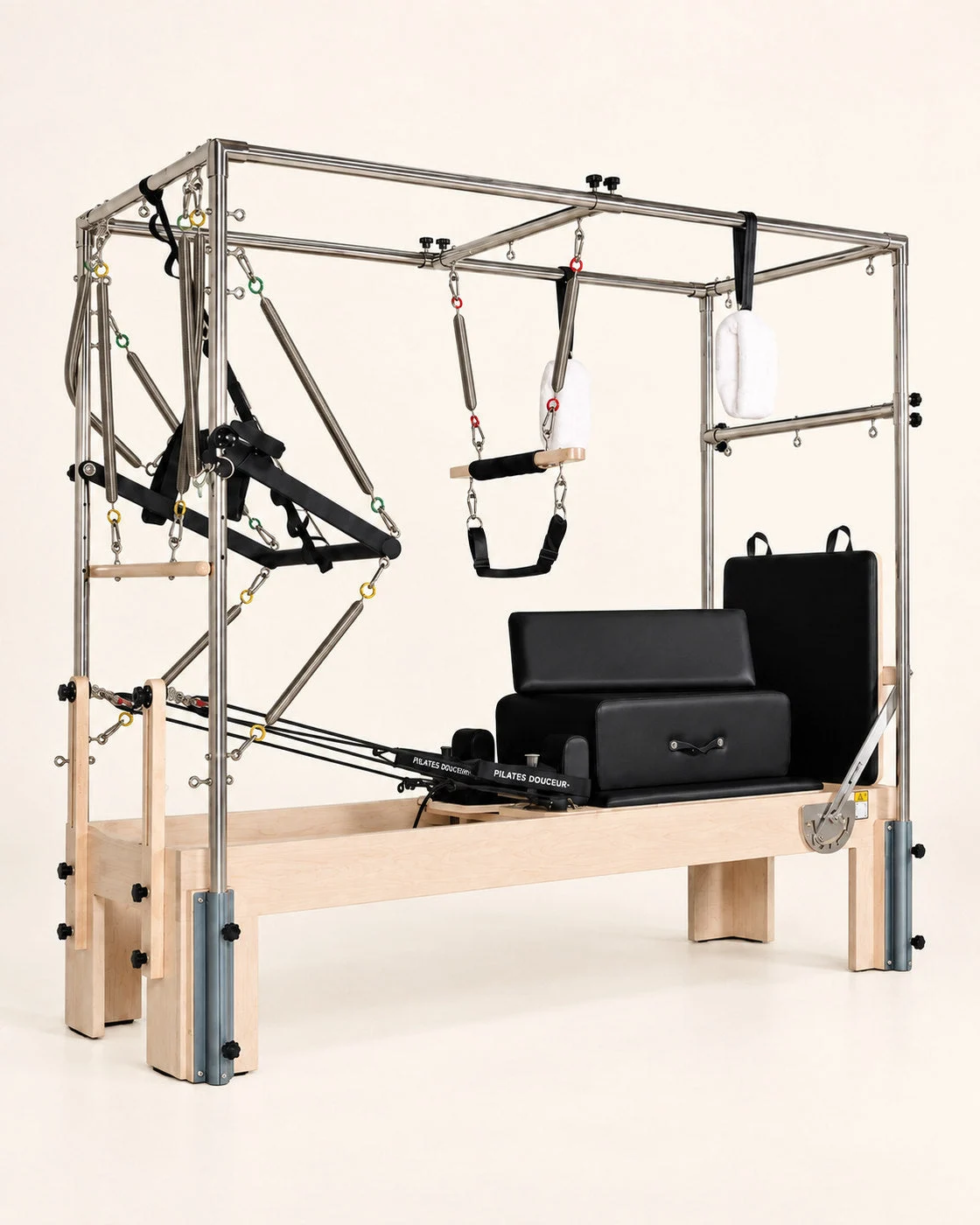
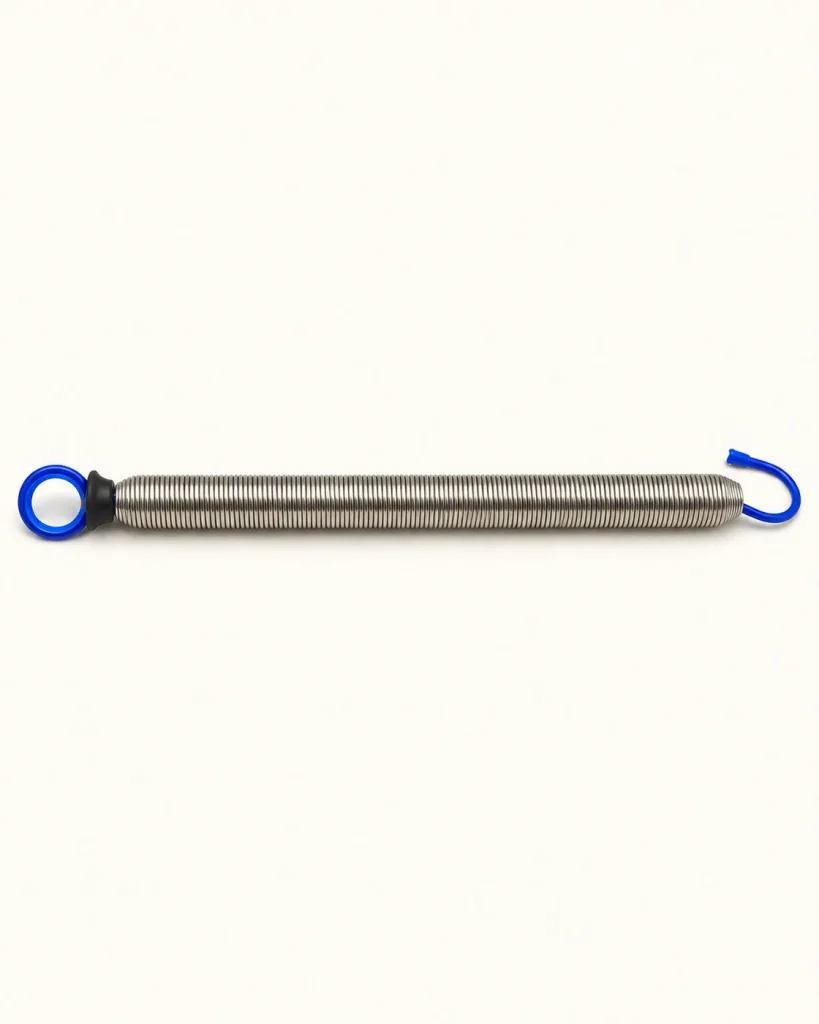
Reformer, Cadillac, chair, barrel: each Pilates machine has its own role. All were devised by Joseph Pilates in the early 20th century and work on the same principle: springs that either resist or assist movement. Here is what each piece of apparatus is for, and how to choose.
The reformer: the most versatile Pilates machine
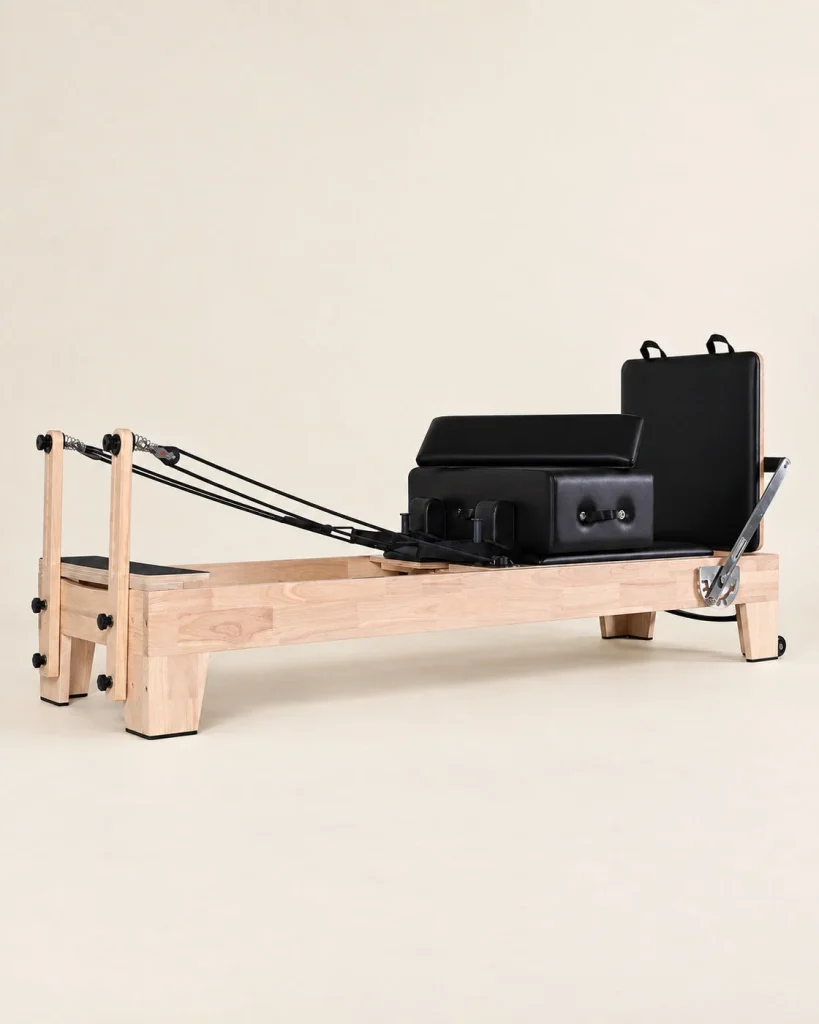
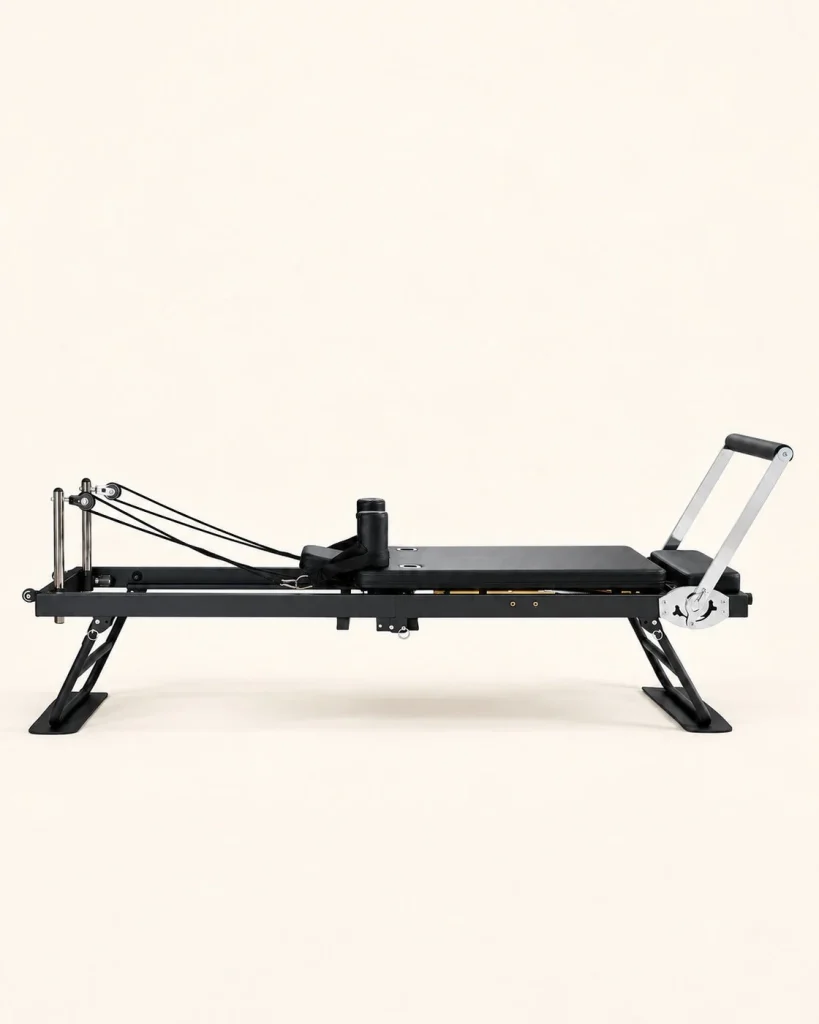
The reformer is a frame along which a carriage glides, attached to springs. You push against a footbar or pull on straps to move the carriage. Changing the number and tension of the springs adjusts the difficulty. It is the most widely used apparatus, both at home and in the studio, because it lets you work lying down, seated, kneeling or standing.
Our reformers come in a foldable version for the home and a fixed studio version. Compare them in our reformer comparison.
The Cadillac (trapeze table): the studio machine
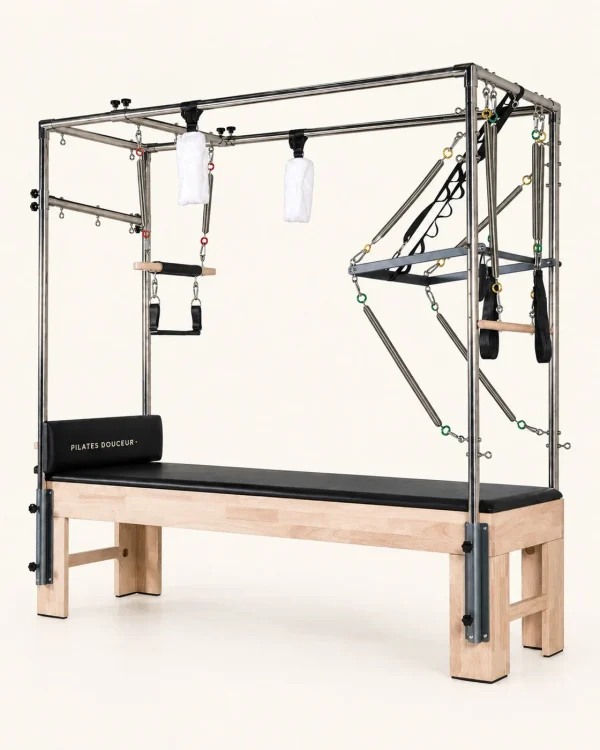
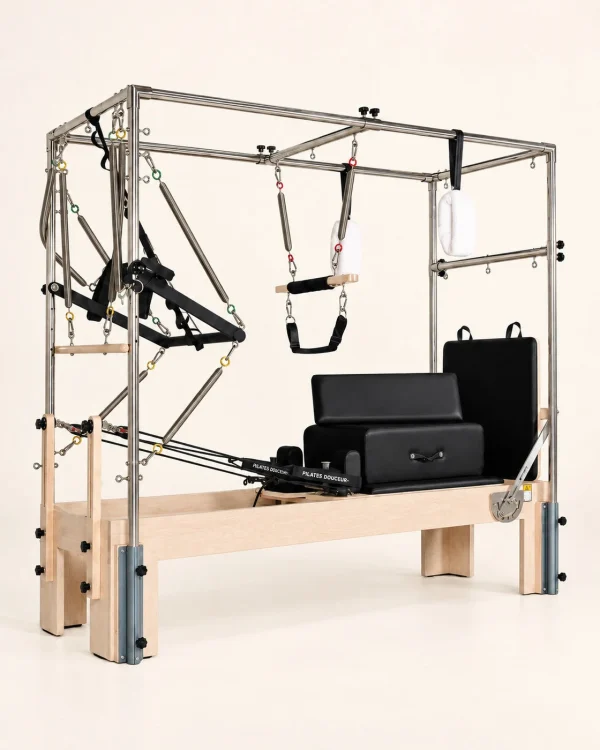
The Cadillac, also called the trapeze table, is a raised table topped by a metal or wooden frame. Bars, straps and springs attach to this frame, greatly increasing the number of support points and positions. It is a studio apparatus, often used to take a client through exercises step by step.
Our oak Cadillac table measures 242 × 72 × 208 cm and weighs 110 kg. The 3-in-1 Studio Reformer combines reformer, tower and Cadillac on a single base (6 reformer springs and 10 trapeze springs). Check your ceiling height before choosing either of these models.
The Pilates chair (Wunda Chair): compact and demanding
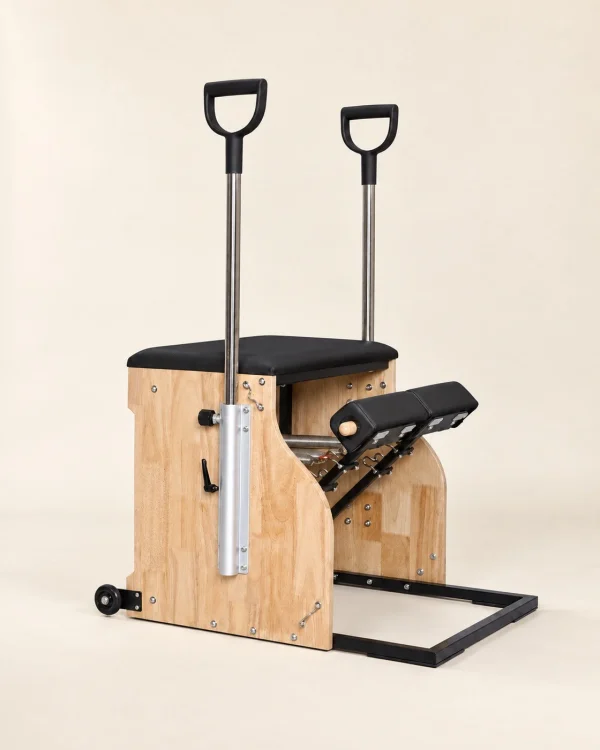
The Pilates chair is a small box with one or two pedals attached to springs. You sit on it, stand on it or support yourself on it with your hands to push the pedal down. Its small surface makes it very demanding on balance and stability.
Our Pilates chair with split pedals measures 76 × 75 × 61 cm and weighs 30 kg, with 4 springs. Its two independent pedals let you work each side separately.
The Ladder Barrel and the arc: working the spine
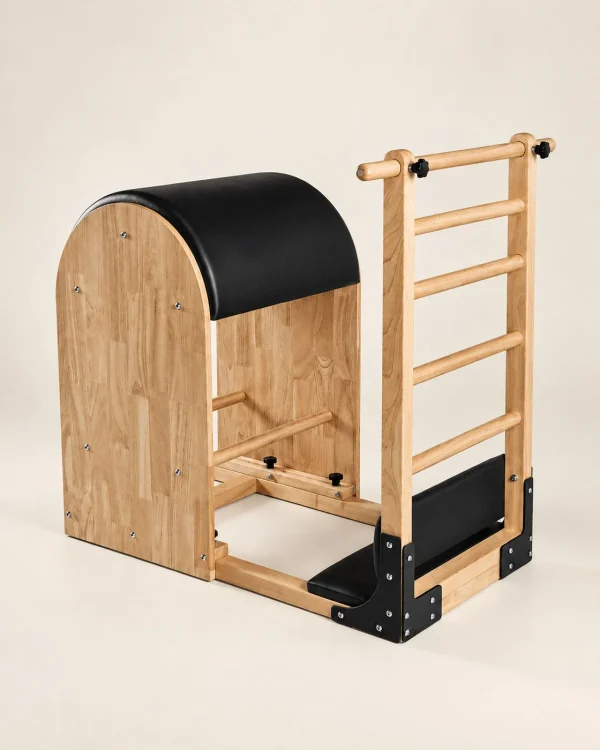
The Ladder Barrel combines a ladder and a curved support (the “barrel”). You lie on it, stretch over it or lean against it for flexion and extension exercises. Our Adjustable Ladder Barrel has an oak frame and a barrel that slides on a rail to adjust the distance.
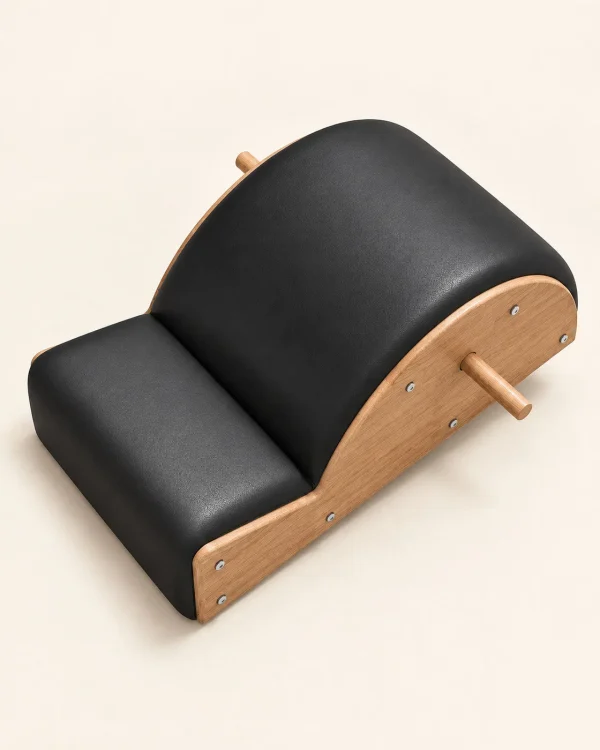
The arc (or “spine corrector”) is a more compact curved support that sits on the floor. Our oak Pilates arc measures 91.4 × 43.2 × 32 cm and weighs 11.8 kg, so it is easy to move.
Which Pilates machine should you choose?
| Machine | Best for | Footprint |
|---|---|---|
| Foldable reformer | Home practice, shared room | Folds away after the session |
| Studio reformer | Dedicated room, studio | About 2.4 m long, fixed |
| Cadillac / 3-in-1 | Studio, supervised sessions | About 2.4 m long and 2.1 m high |
| Chair | Adding to a reformer, small spaces | Under 80 cm per side |
| Barrel / arc | Stretching, spine work | Compact (arc) to medium (barrel) |
For a first machine at home, the reformer is still the most versatile choice. The chair, barrel and arc can then add variety to your practice. To equip a studio with several stations, see our studio project page or request a quote.
Do you need an instructor to use these machines?
All these machines use springs under tension. Learn the settings and basic movements with a Pilates instructor before practising on your own, and talk to a healthcare professional if you are in pain or have a health condition.