Pilates tips · · 6 min read
Reformer Pilates vs mat Pilates: what are the differences and how do you choose?
Mat Pilates and the reformer share the same principles; the choice depends on your budget, your space and the instruction available to you.
Mat Pilates and reformer Pilates rest on the same principles; what changes is the equipment. Mat work needs a mat and uses your body weight; the reformer adds a carriage and adjustable springs. Base your choice on your budget, space, experience and the instruction available to you, rather than on the idea that one method is “better”.
The same principles, two kinds of equipment
Mat Pilates and reformer Pilates share the same foundation. As the American Council on Exercise (ACE) points out, both are built on the same core principles: control of movement, breathing, core work and precise alignment.
The difference is the equipment. On the mat, you work with your body weight as the main resistance. On the reformer, you work on a machine whose springs add resistance or support. Both serve the same goal: moving with control.
Mat Pilates: accessible, with minimal equipment
Mat Pilates is the easiest way to start: all you need is a mat. ACE notes that it can be done almost anywhere, including at home. Your body provides the resistance, so you have to hold each position and control each movement without outside help.
Its advantages:
- A low entry cost: a mat, and perhaps a few small accessories.
- Minimal space: all you need is room for a mat, which can be stored anywhere.
- A portable practice: at home, at the gym, when travelling.
Its limitations: you progress through more demanding positions rather than by adjusting the load. ACE also notes that getting down to the floor and back up can be harder for some people.
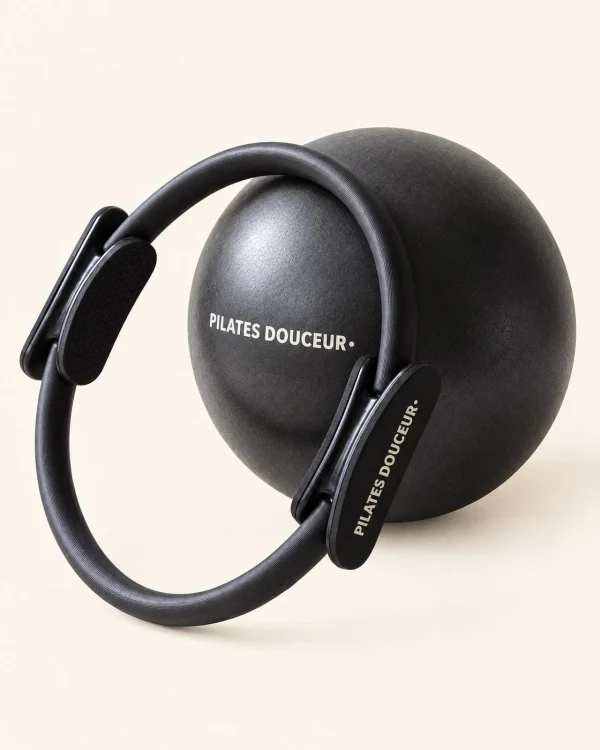
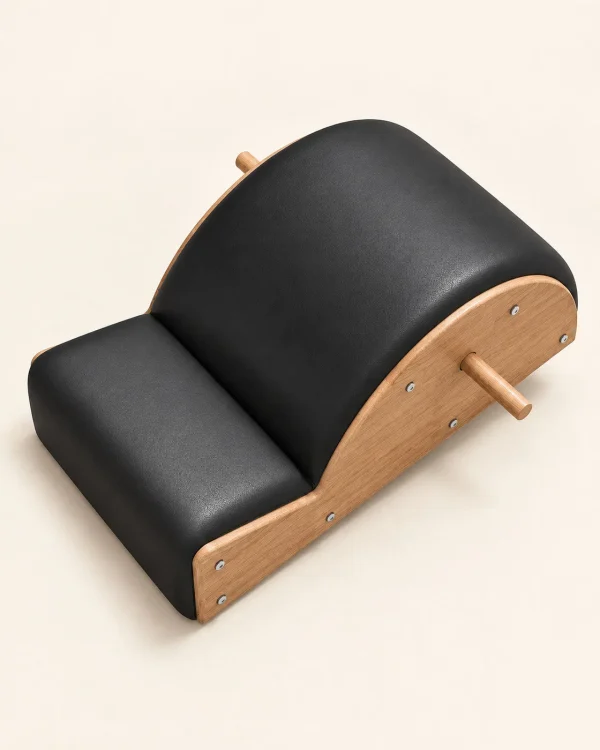
To vary your mat exercises, a few small accessories will do: the ball and ring duo (€29.95) or an oak Pilates arc (€299.95), a padded curved support designed to add variety to mat work.
The reformer: carriage, adjustable springs and a wide range of exercises
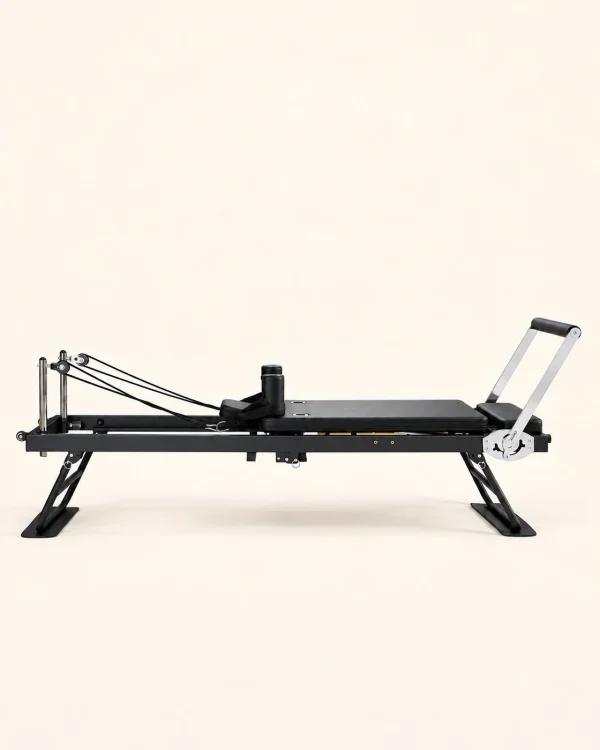
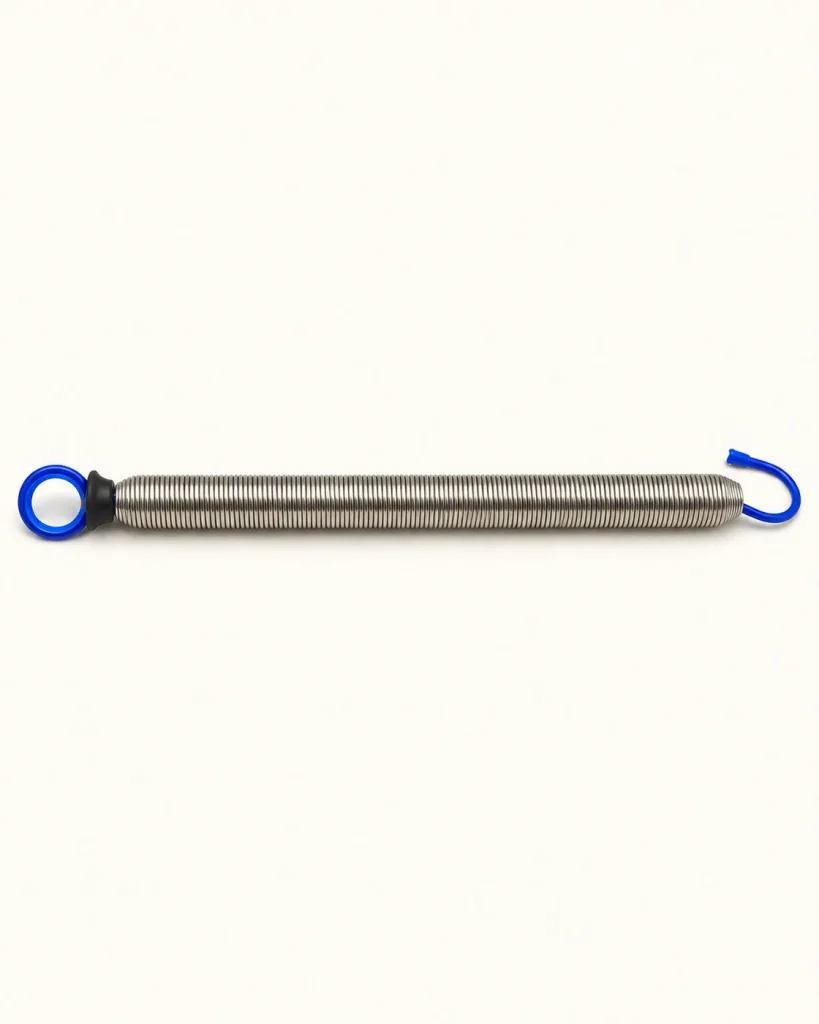
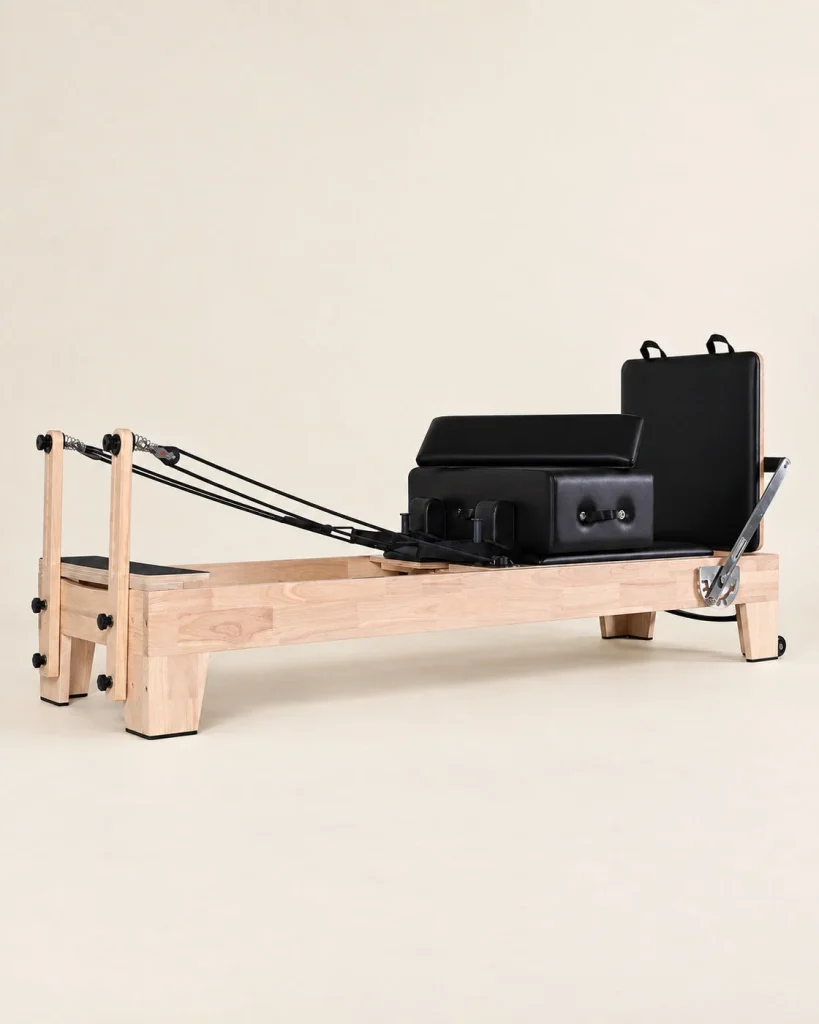
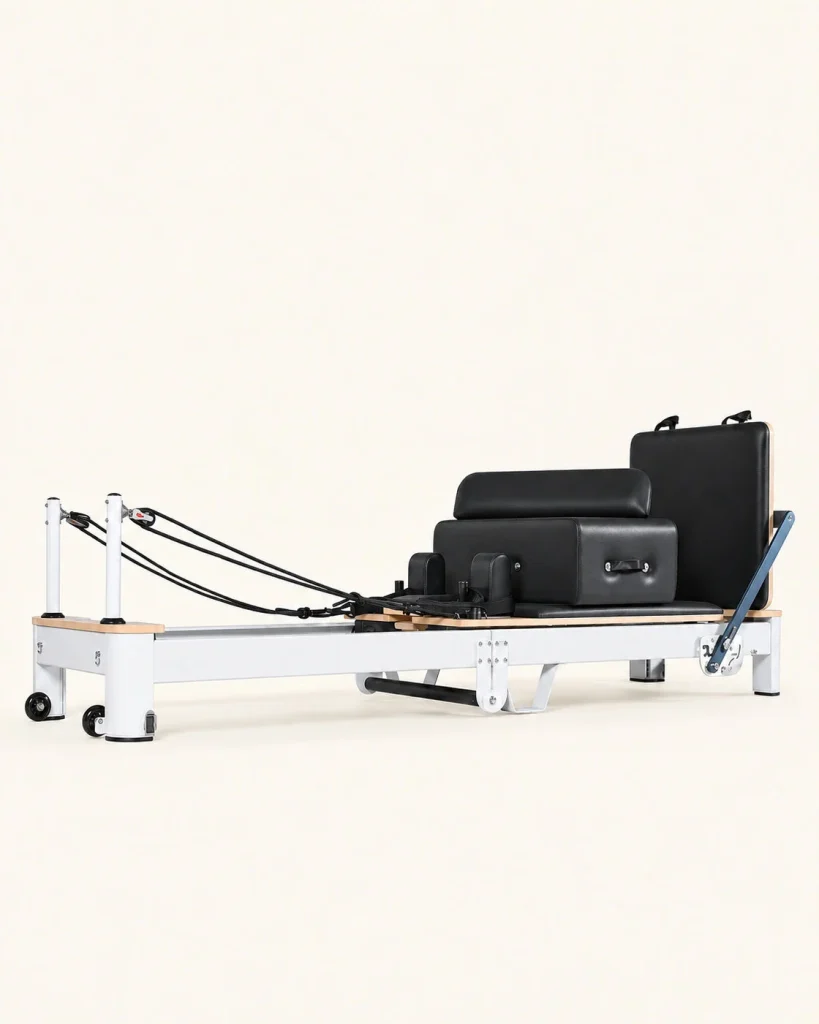
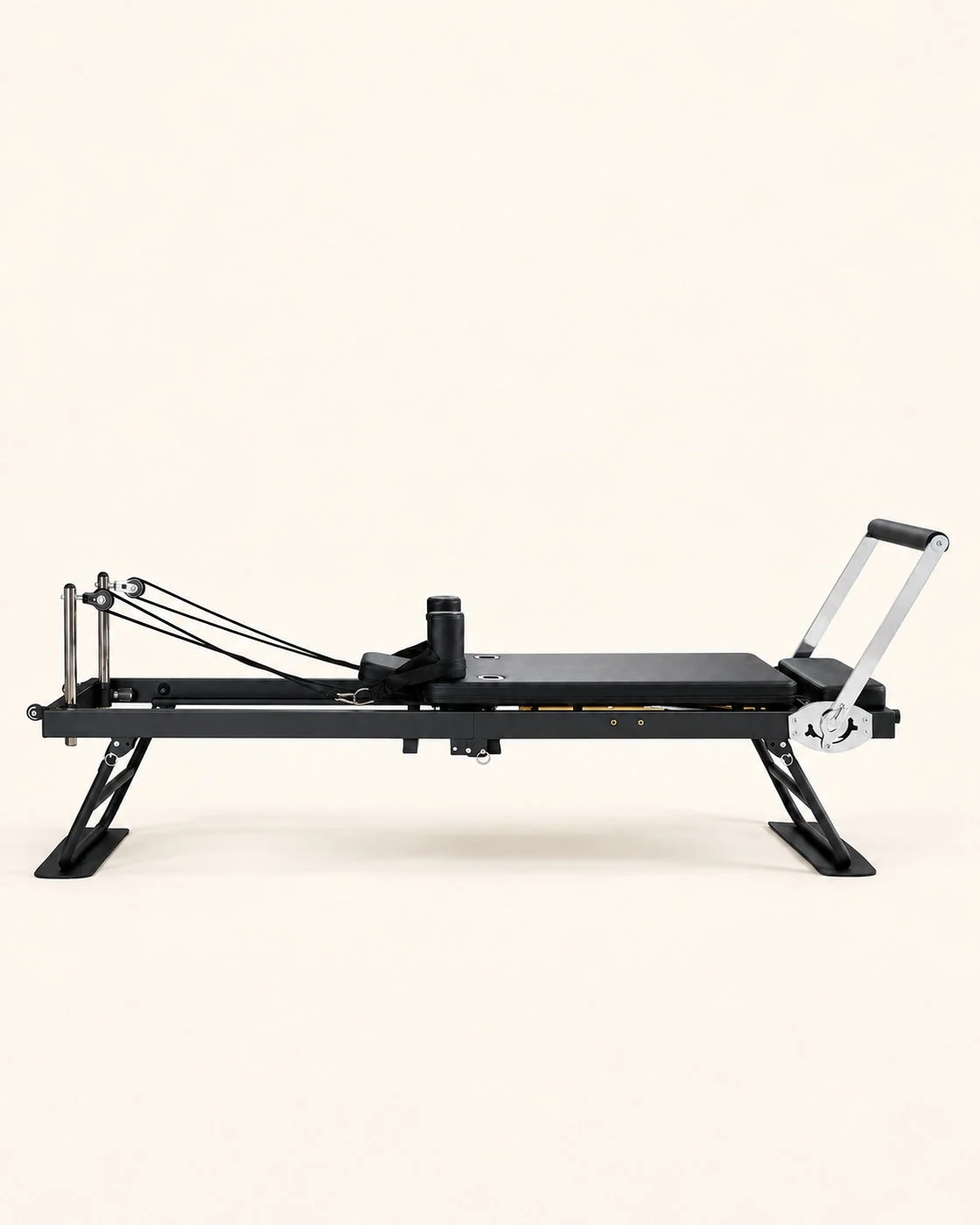
ACE describes the reformer as a machine made up of a sliding carriage, springs, straps and a footbar. The springs are adjustable: depending on the exercise, they can add resistance or provide support.
What the reformer offers:
- Adjustable load: by changing the springs, you adapt the exercise.
- Varied positions: lying, seated, kneeling, standing, with hands or feet in the straps.
- Physical guides: the footbar, shoulder rests and carriage help you find your alignment.
What it demands: space, a bigger budget and time to learn the settings. Decathlon Conseil Sport notes that the reformer is generally recommended for more advanced practitioners, is found mainly in specialist studios and is usually used under the guidance of a coach.
At a glance: equipment, space, budget, instruction and variety
In short: the mat wins on cost and space, the reformer on load adjustment and variety of positions.
| Criterion | Mat Pilates | Reformer Pilates |
|---|---|---|
| Equipment | A mat, small accessories optional | A machine: carriage, springs, straps, footbar |
| Resistance | Body weight | Adjustable springs (resistance or support) |
| Space | The area of a mat | 228 to 242 cm long (for our models with a listed in-use length), plus space around it |
| Equipment budget | Low | €699.00 to €2,499.95 for our reformers |
| Instruction | Classes recommended to learn the basics | Supervised classes recommended before practising alone |
| Variety | Wide, progression through more demanding positions | Wide, progression also through spring settings |
| Storage | Instant | Depends on the model: foldable or fixed |
Our reformers range from the Compact Foldable Reformer at €699.00 to the 3-in-1 Studio Reformer at €2,499.95. Our reformer comparison lists every model with its dimensions.
Regular exercise: what the official guidelines say
Pilates, whether on a mat or on a machine, fits in with official physical activity guidelines. The French public health website Manger Bouger recommends that adults do at least 30 minutes of dynamic physical activity a day. It also recommends muscle-strengthening, flexibility and balance activities twice a week.
Pilates works on exactly that: strength, mobility, posture and balance. So it has its place within these guidelines, on a mat or on a reformer. Neither form guarantees results: what matters is practising regularly and well. If you are in pain, pregnant or have a health condition, talk to a healthcare professional before you start.
Starting on the reformer: get guidance and keep it simple
You can try the reformer as a beginner, but not on your own from day one. The machine uses springs under tension and a moving carriage: you need to learn how to get on and off, attach the springs and control the carriage’s return.
- Take a few supervised classes with a Pilates instructor, in a studio or in private sessions.
- Learn the basic settings: springs, footbar, headrest, strap length.
- Start with simple exercises and few variations while you learn to control the carriage.
- Note down your settings so you can use them at home if you buy your own machine.
If you already do mat Pilates, you know the principles, so moving on to the reformer will feel more natural. Our reformer guide explains the settings and the key things to know.
Combining both at home
You do not have to choose one or the other: many people combine mat and reformer work, and you can build up a home set-up in stages.
| Stage | Equipment | Price |
|---|---|---|
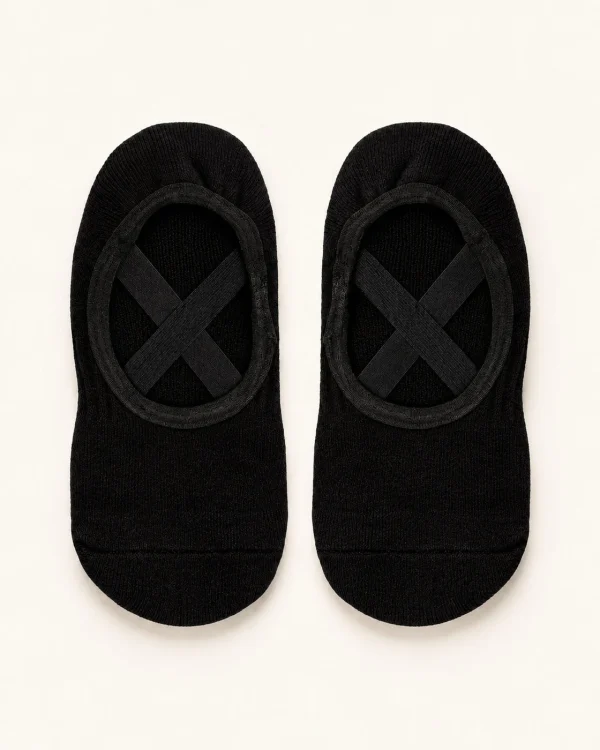
| Mat practice | A mat and non-slip socks | Socks: €12.95 |
| Adding variety on the mat | Ball and ring duo, oak Pilates arc | €29.95 and €299.95 |
| Adding the machine | Compact Foldable Reformer: 5 springs, 105 × 55 × 24 cm folded, 32 kg | €699.00 |
The Compact Foldable Reformer comes with resistance bands, a ball with pump and a ring; the sitting box is sold separately. To find out which model suits your room, read our article setting up a Pilates reformer at home and our method for choosing a reformer.
Frequently asked questions
Is the reformer more effective than mat Pilates?
No, neither is superior. Both practices share the same principles. The reformer lets you adjust the load with springs; the mat requires you to control the whole movement with your body weight. Choose according to your goals, your budget and the instruction available to you.
Can you go straight onto the reformer?
Yes, provided you are supervised at first. Decathlon Conseil Sport describes it as generally recommended for more advanced practitioners and most often used with a coach. A few classes will teach you the settings and the basics safely.
Should you take classes before practising on your own?
Yes, that is recommended, especially on the reformer. An instructor teaches you the settings, posture and how to control the carriage. You can then practise on your own with confidence.
What is the minimum equipment to practise at home?
On the mat: a mat, plus non-slip socks and small accessories if you wish. On a machine: a reformer that suits your room; our entry-level model, the Compact Foldable Reformer, costs €699.00.
How many sessions a week should you do?
There is no single number. The Manger Bouger guidelines recommend that adults do muscle-strengthening, flexibility and balance activities twice a week, in addition to at least 30 minutes of dynamic physical activity a day. Work out your routine with your instructor.
Key points
- Mat and reformer share the same principles; only the equipment differs.
- Mat work: just a mat, low cost and you can do it anywhere.
- The reformer: adjustable springs and more positions, but it needs space and a bigger budget.
- On the reformer, start with supervised classes and simple settings.
- You can combine both at home, step by step.