Pilates tips · · 7 min read
Reformer springs: colours, tension, maintenance and replacement
Reformer spring colours vary between manufacturers, so your model’s manual is the reference. Here is how to look after the rails, ropes and straps, and when to replace parts.
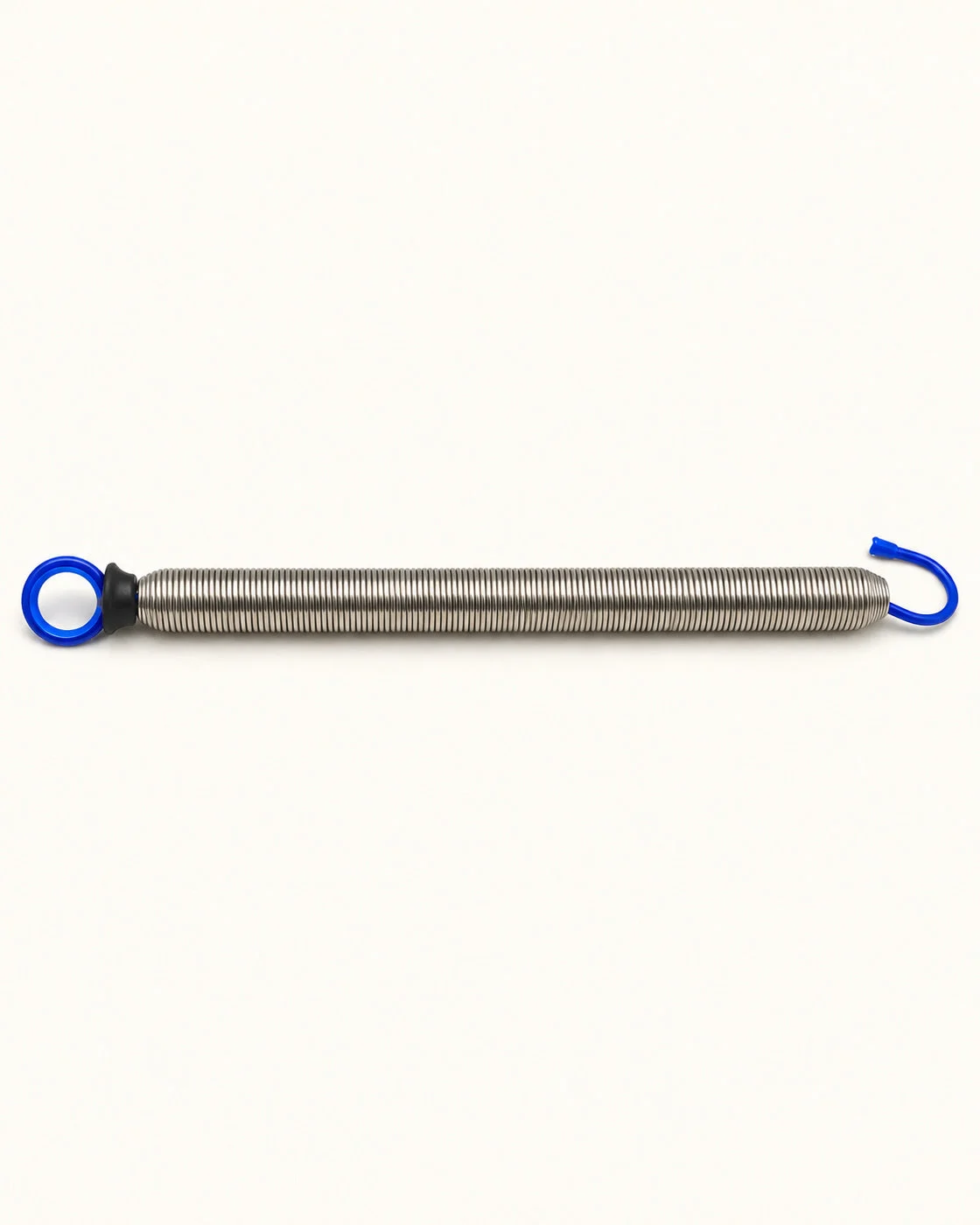
The springs on a reformer create the resistance of the carriage, and their colours do not mean the same thing from one brand to another. To use them properly, refer to your model’s manual. To keep them in good condition, clean the rails regularly, check the ropes and straps, and replace straight away any part that does not look right.
What do reformer springs do?
The springs connect the moving carriage to the frame of the machine. They create resistance when you push or pull, and they hold the carriage back as it returns to its starting position. By attaching more or fewer springs, or springs of different tensions, you adjust the load for each exercise.
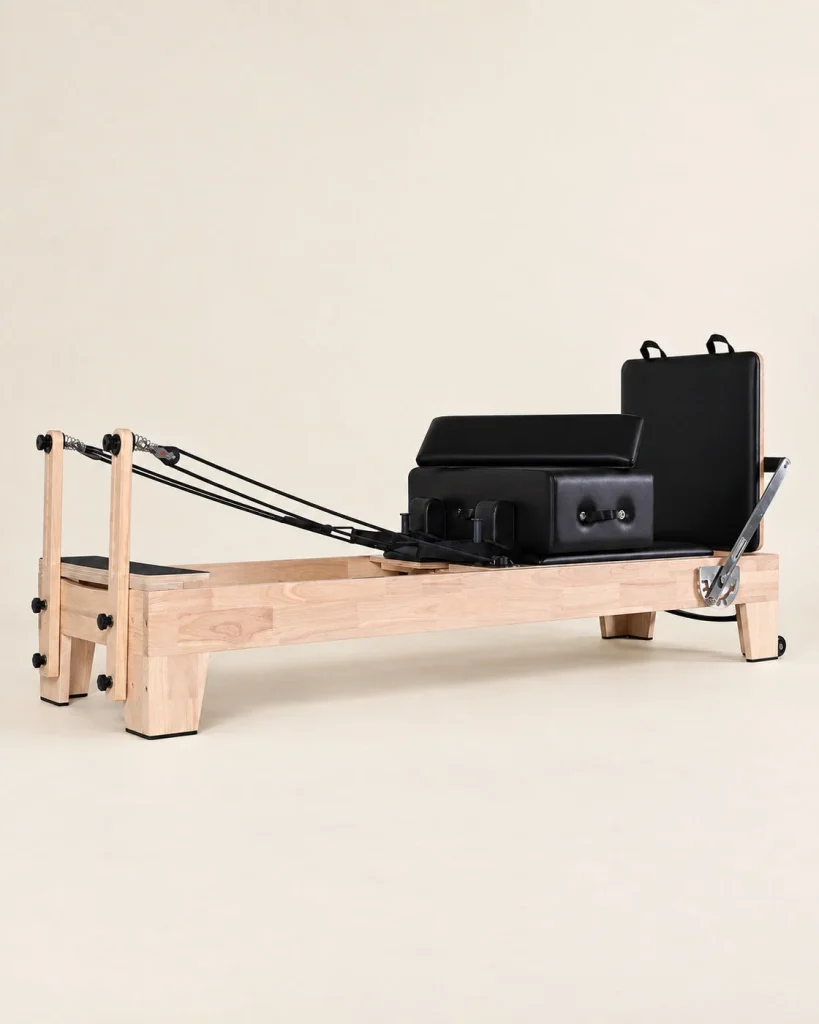
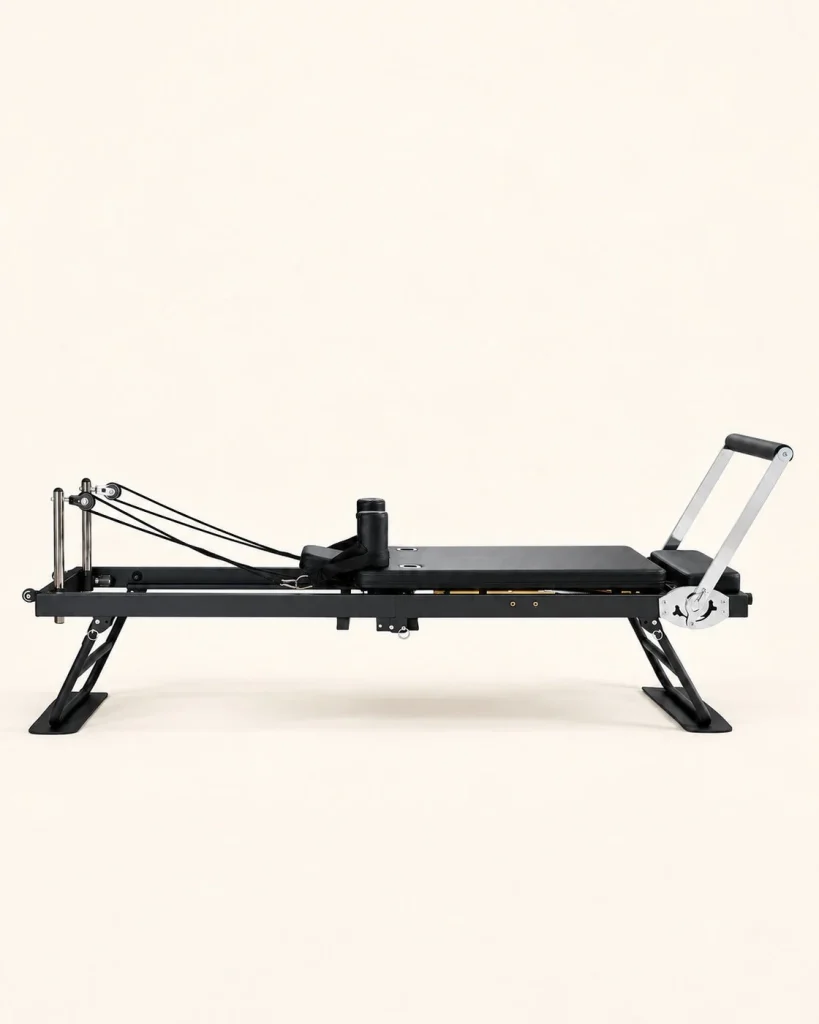
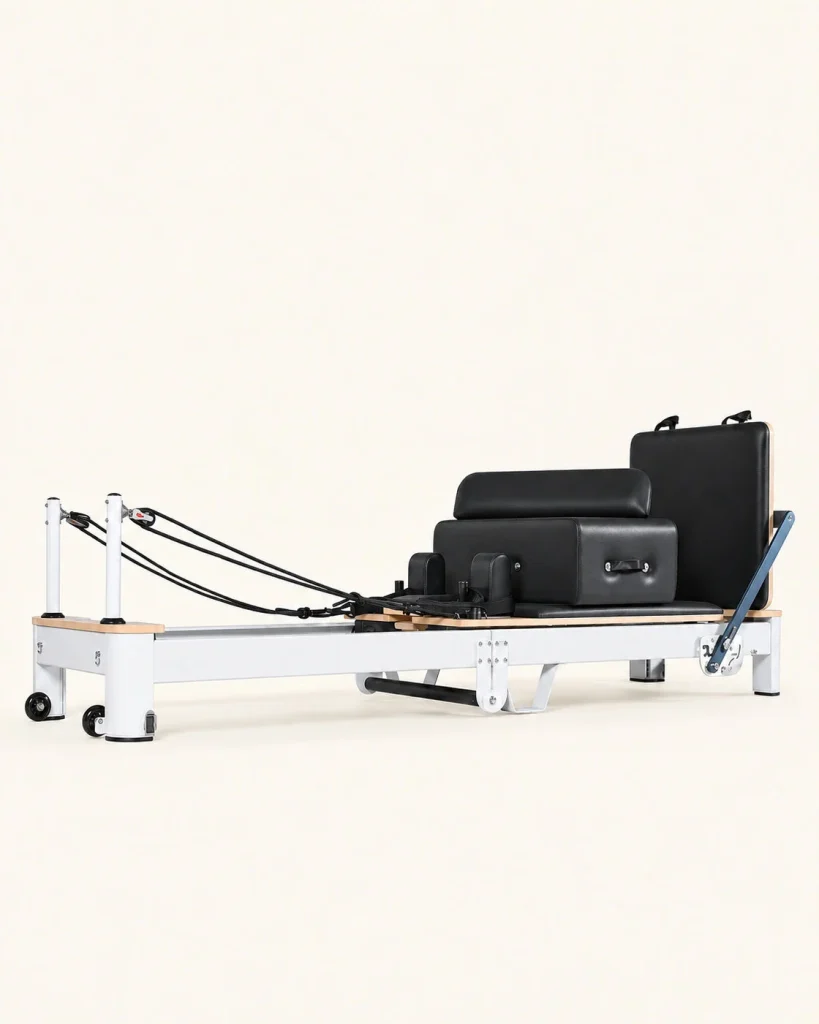
The number of springs varies from one machine to another. In our range, the Compact Foldable Reformer has 5 springs, while the Wooden Studio Reformer and the Studio Reformer with Tower each have 6. So each spring does two jobs at once: it sets the workload and it keeps the carriage’s return under control. That is why springs deserve particular attention.
Colours and tensions: why there is no universal code
There is no universal link between the colour of a spring and its tension. Each manufacturer chooses its own colours, lengths and resistance levels. A red spring from one brand is not necessarily equivalent to a red spring from another.
A common convention, but specific to each manufacturer
Many brands use colours to identify tensions. The Pilatesology spring guide compares several manufacturers side by side, and it shows that the same colours do not indicate the same levels from brand to brand.
To take one example, the American manufacturer Balanced Body gives the following colour key for its own springs on its springs page. It applies to that brand only.
| Colour (Balanced Body only) | Level stated by the manufacturer |
|---|---|
| Yellow | Very light |
| Blue | Light |
| Red | Medium |
| Green | Heavy |
Do not apply this table to any other machine. On a reformer from another brand, the same colour may indicate a different tension.
Lighter does not always mean easier
Less resistance is not necessarily easier. With fewer springs, the carriage is held back less, so you have to control the movement yourself, both on the way out and on the way back. The Pilatesology guide sums it up like this: if you feel “compressed”, the load is too heavy; if you lose control, it is too light. So the right setting depends on the exercise, not just on how strong you are.
Refer to your model’s manual
The only reliable reference for your machine is its manufacturer’s documentation: number of springs, tensions, attachment order and recommended settings. If you go to classes, your instructor will tell you the right settings for each exercise. If you have lost the manual, contact the seller of the machine with its model reference.
How do you maintain a reformer?
Day-to-day care comes down to three things: cleaning the rails and wheels, checking the ropes and straps, and looking after the upholstery. No special products are needed. This advice draws on guidance from instructor Kaleen Canevari, published on Pilates Intel, and on our installation and care page.
Rails and wheels: simple, regular cleaning
Clean the rails every week and wipe the wheels at the same time, as Pilates Intel recommends. Dust, hair and small bits of debris stop the carriage from gliding smoothly. A cloth and water are enough: there is no need for a specialist cleaner.
The same source advises against silicone spray on the rails. So do not add lubricant of your own accord: stick to what your machine’s manual specifies.
Ropes and straps: check regularly for wear
Pilates Intel recommends checking ropes and straps every three months. Look for stitching that is coming undone, ropes that are fuzzy or fraying, and buckles that no longer hold. A damaged rope can snap mid-exercise.
Upholstery: only the products specified by the manufacturer
The platform, headrest and shoulder rests are often covered in faux leather or leather. Use only the cleaning products the manufacturer recommends. Anything too harsh can damage the upholstery or make it slippery.
When should you replace a spring, rope or strap?
Replace any part that does not look right straight away. Otherwise, follow the replacement schedule set by your machine’s manufacturer. That is the rule given by Pilates Intel, and it is the safest one.
Warning signs to look out for:
- Spring: coils that are misshapen or stay open at rest, rust, an unusual noise, a damaged hook or end fitting, or a spring that does not recoil like the others.
- Rope: frayed fibres, fuzzing, a flattened or stiff section, or a knot that slips.
- Strap: stitching that is coming apart, a cracked buckle or torn fabric.
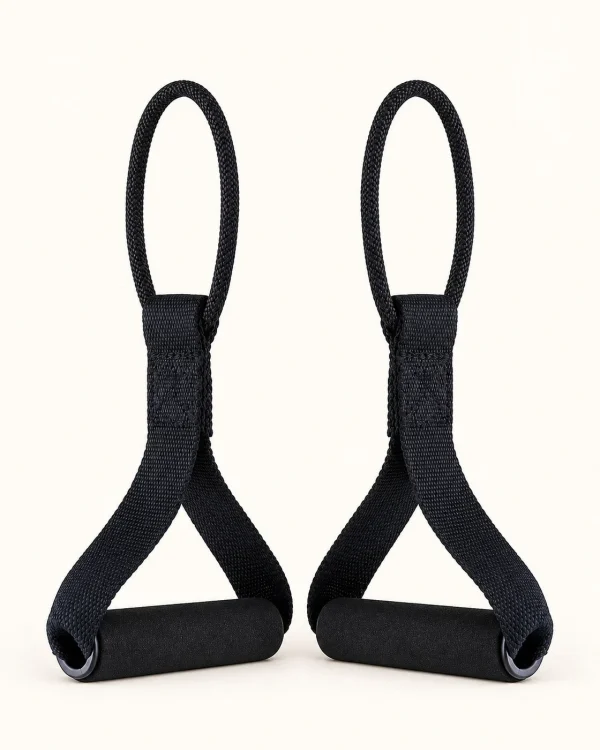
- Handle: a loose fixing or a split or worn grip.
We do not quote a lifespan in years for springs: it depends on the machine, how often it is used and the manufacturer. If in doubt, stop using the machine and get the part checked.
If you are replacing a single spring, ask the manufacturer whether all springs of the same tension should be changed at the same time.
Parts available from Pilates Douceur
We sell replacement parts for reformers. Always check compatibility with your machine before ordering: length, tension, diameter and fixing type vary from model to model.
| Part | Pack | What to check | Price |
|---|---|---|---|
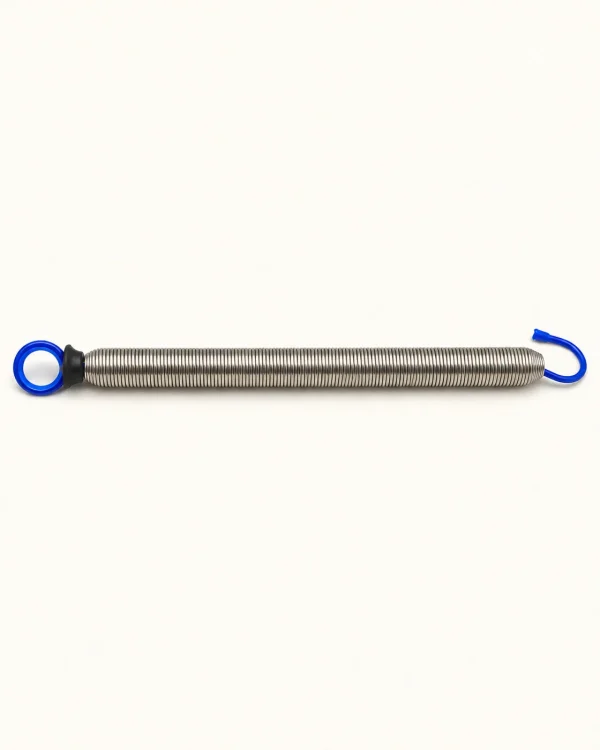
| Reformer spring | Sold individually, for 5-spring configurations | Length and tension to check against your model | €19.95 |
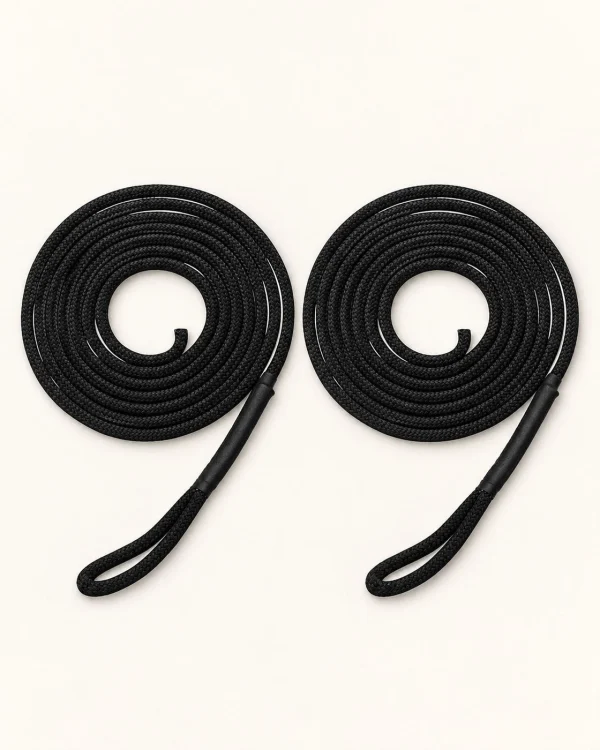
| Reformer ropes — Set of 2, 8 mm | Set of 2 ropes, extra-long | 8 mm diameter | €29.95 |
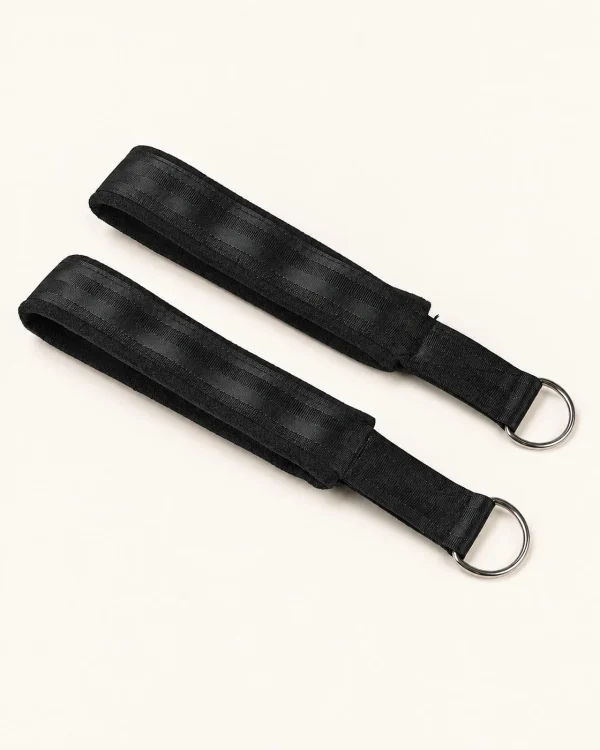
| Hand straps | Pair, adjustable length | Compatibility depends on the reformer | €24.95 |
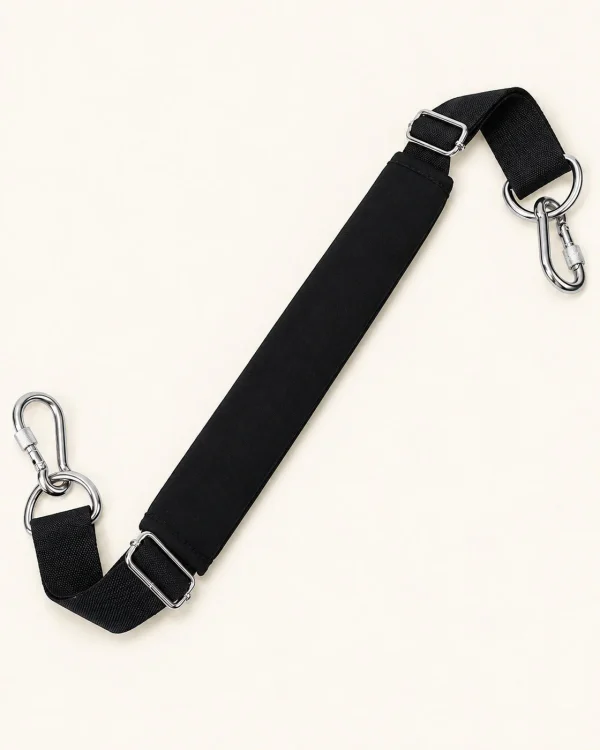
| Foot straps | Length adjustable with a buckle | Fixing and pack size to be confirmed | €19.95 |
| Reformer handles | Pair, fixes to the end of the rope | Compatibility depends on the model | €29.95 |
Our spring is sold individually, for a 5-spring configuration; its length and tension should be checked against your model. We do not specify a colour code for this spring. Before ordering, measure the spring you are replacing at rest, note the brand and model of your reformer, and compare it with the product page. All our parts are in the parts and accessories collection.
Not sure about compatibility? Contact us with the brand, the model and a photo of the part, and we will let you know whether it fits.
For studios: planning maintenance across several machines
In a studio, machines are used several times a day. So maintenance needs to be planned and recorded for each machine.
- A logbook for each machine: purchase date, model reference, cleaning dates, parts replaced.
- A daily visual check before the first class: springs attached, ropes, straps, carriage gliding smoothly.
- Weekly cleaning of the rails and wheels, as Pilates Intel recommends.
- A quarterly check of the ropes and straps.
- A stock of common parts so that no machine is left out of action: compatible springs, ropes, straps and handles.
- The manufacturer’s schedule for preventive spring replacement.
Any machine with a part that does not look right should be taken out of use until it has been repaired. To equip or replace several stations, send a quote request: volume pricing applies from 2 pieces of equipment.
Frequently asked questions
What do the spring colours mean?
They indicate a tension level, but each manufacturer has its own code. At Balanced Body, for example, yellow is very light and green is heavy. This key applies to that brand only: check your machine’s manual.
How often should the rails be cleaned?
Pilates Intel recommends cleaning them every week, wiping the wheels as well. A cloth and water are enough.
How do I know if a spring needs replacing?
As soon as something does not look right: misshapen coils or coils that stay open, rust, noise, a damaged end fitting, or a spring that behaves differently from the others. Otherwise, follow the manufacturer’s replacement schedule.
Is the replacement spring compatible with my reformer?
Our spring is designed for a 5-spring configuration. Its length and tension should be checked against your model. Send us the brand, model reference and a photo and we will confirm.
Can the rails be lubricated?
Not unless the manufacturer says so. Pilates Intel advises against silicone spray. Follow your machine’s manual.
Key points
- Springs set the resistance and hold the carriage back: they need regular checks.
- There is no universal colour code: each manufacturer has its own, and the manual is the reference.
- Rails and wheels: a cloth and water every week, no silicone spray.
- Ropes and straps: check every three months; replace any part that does not look right immediately.
- Before buying a part, check its length, tension, diameter and fixing.