Pilates tips · · 7 min read
How to choose a Pilates reformer for home: the checklist before you buy
A 7-step checklist for choosing a Pilates reformer for home: measurements, format, weight, springs, material, accessories and budget, with a comparison of our 3 foldable models.
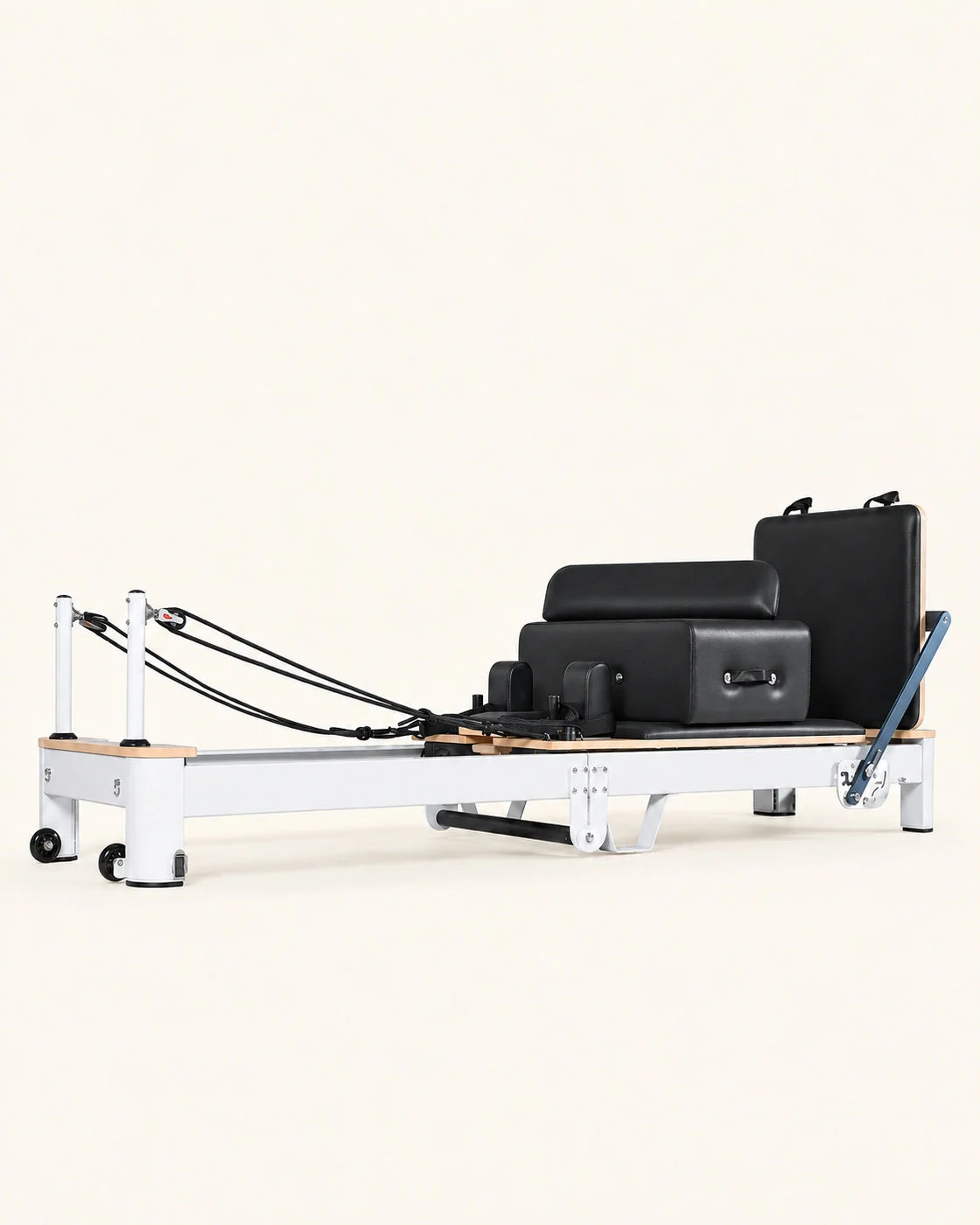
To choose a Pilates reformer for home, work through these seven points in order: your measurements, foldable or fixed format, the weight you will handle, the springs and adjustments, the material, the accessories included, and finally the full budget including delivery and returns. This checklist helps you compare models on concrete criteria rather than on someone else’s ranking.
If you are new to all this, start with our guide setting up a Pilates reformer at home. This article is the checklist to keep to hand when you order.
Step 1: measure the workout area, storage and access
Take three separate measurements before you look at a single model. One is not enough, because a reformer takes up a different amount of space in use, in storage and on its way in.
- The workout area: length and width of the free space where the machine will be unfolded. Allow clearance around it to get on and off and move around.
- The storage space: for a foldable model, where it will live between sessions (against a wall, under the stairs, in a box room). Note the available height, not just the floor area.
- The route in: door widths, corridor corners, stairs, lift. The parcel has to be able to get to the room.
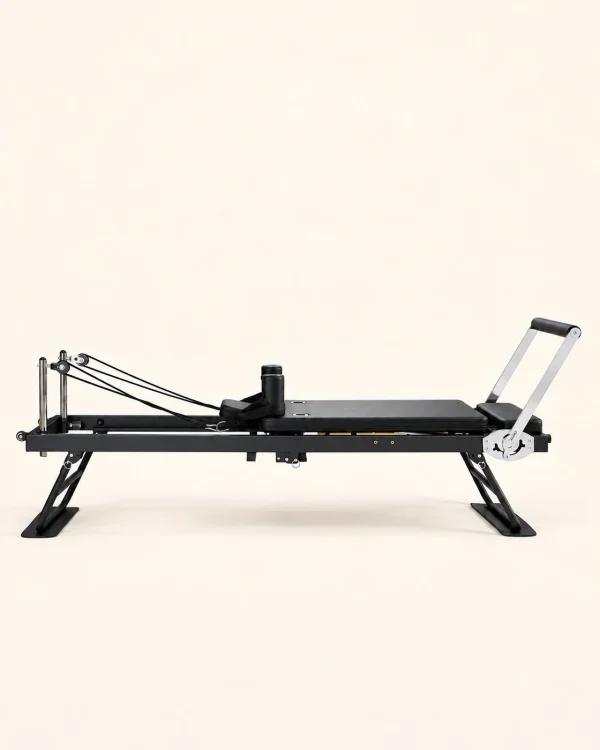
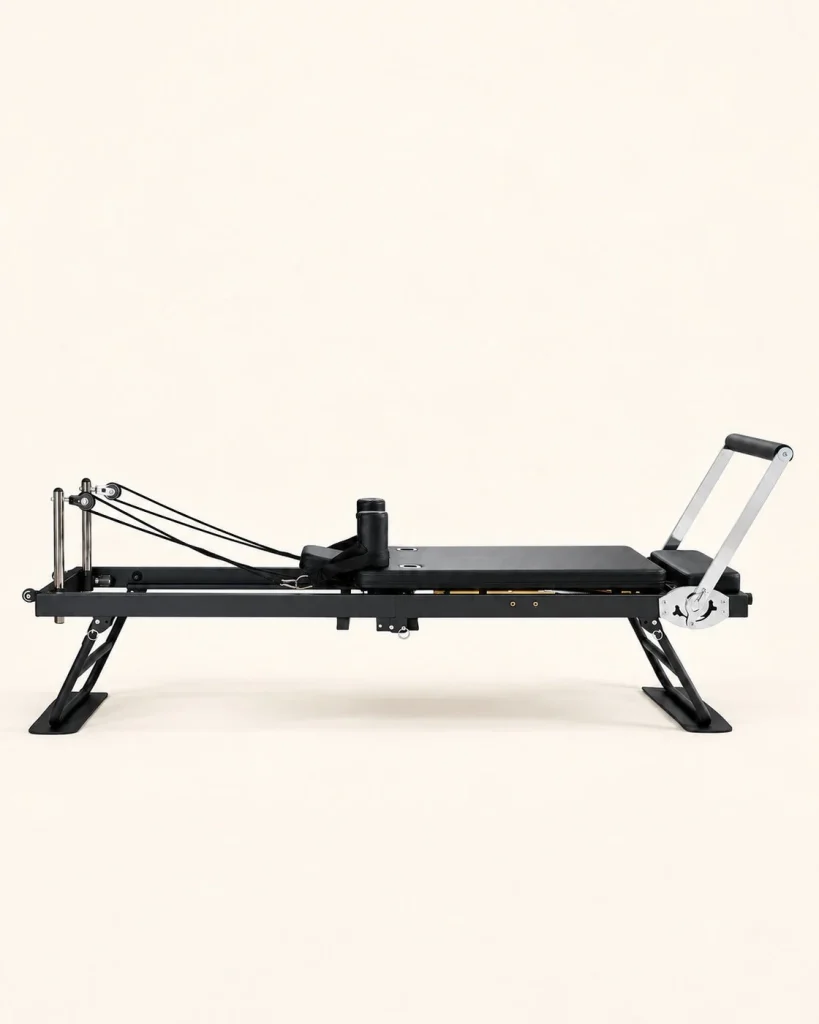
Then compare these figures with the unfolded and folded dimensions on the product page. On our Aluminium Foldable Reformer, for example, the difference is clear: 237 × 74 × 28 cm unfolded, 136 × 74 × 50 cm folded. The length on the floor is almost halved, but the height increases.
Tick: all three measurements are noted down, with clearance allowed around the workout area.
Step 2: choose between foldable and fixed
Choose a foldable reformer if the room has other uses, and a fixed reformer if you can dedicate a space to it. Every other decision follows from this one.
- Foldable: you get the room back after your session. The trade-off is that you have to unfold, lock and adjust the machine every time.
- Fixed: the machine is always ready to use, with nothing to move, but it needs a permanent spot.
Ask yourself a simple question: will you fold it away after every session, or only now and then? If the answer is “never”, a fixed model may suit you better. The pros and cons of the foldable format are covered in our article foldable reformer: benefits and dimensions.
Tick: you know how many times a week the machine will be unfolded and put away.
Step 3: check the weight and handling
A foldable reformer is still heavy, so check its weight before buying, as you will be moving it often. On our foldable models, the listed weight ranges from 32 kg for the Compact to 68 kg for the Aluminium.
- Who will move it? One person or two? How often?
- How far? A few metres across a flat floor, or through a narrower passage?
- What does the manual say? Check how the machine is moved once folded.
For the Wooden Foldable Reformer, the weight is not listed on the product page: ask us before ordering if handling matters to you. Either way, arrange for help on the day of delivery and installation.
Tick: the weight is known and manageable for whoever will put the machine away.
Step 4: look at the springs and adjustments
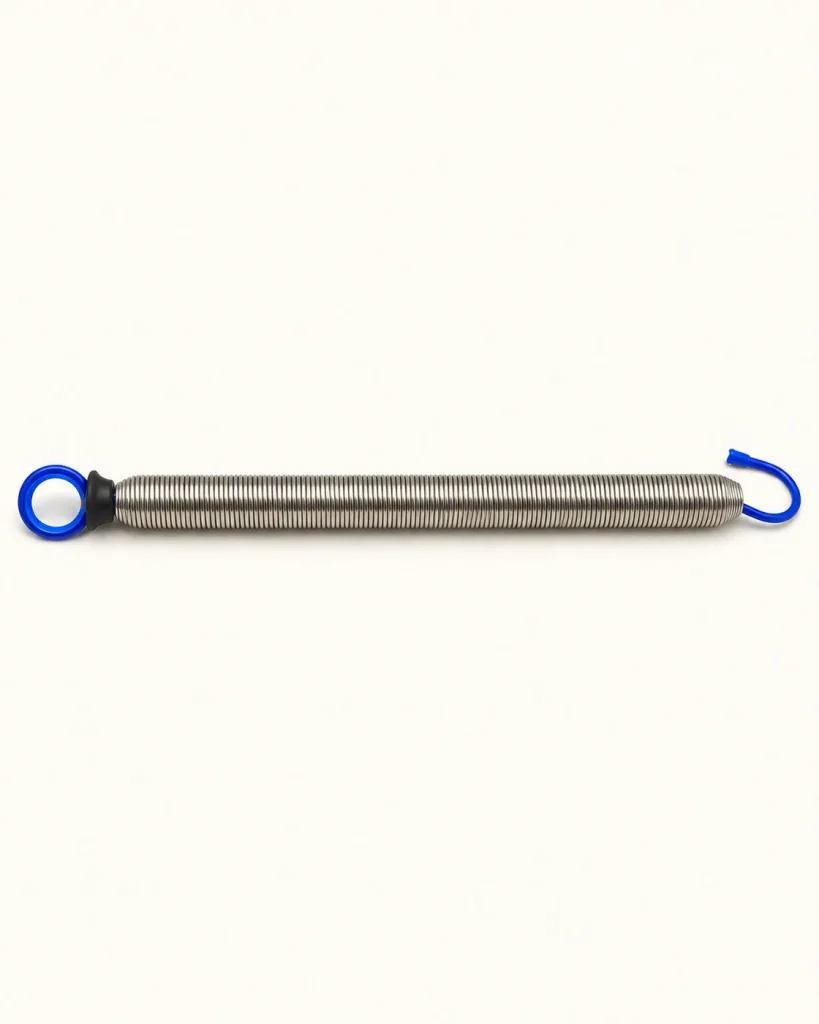
The springs set the carriage resistance, so look at how many there are and what can be adjusted. The more combinations, the more you can fine-tune the intensity from one exercise to the next.
- Number of springs: our Compact Foldable Reformer has 5 springs and adjustable armrests. On the Aluminium and Wooden models, resistance is adjusted with springs.
- Easy adjustments: footbar, rests, strap length. Check that they are easy to reach and operate.
- Spare parts: springs and ropes wear out. Check that replacement parts are available for your model.
For beginners, the right number of springs is not “as many as possible”. What matters is knowing which setting to use for each exercise, and that is where an instructor will save you time.
Tick: you know the number of springs and the adjustable parts of the model.
Step 5: choose the material and look
The frame material mainly affects how the machine looks in your home. It is no substitute for the other criteria on this list when judging a reformer.
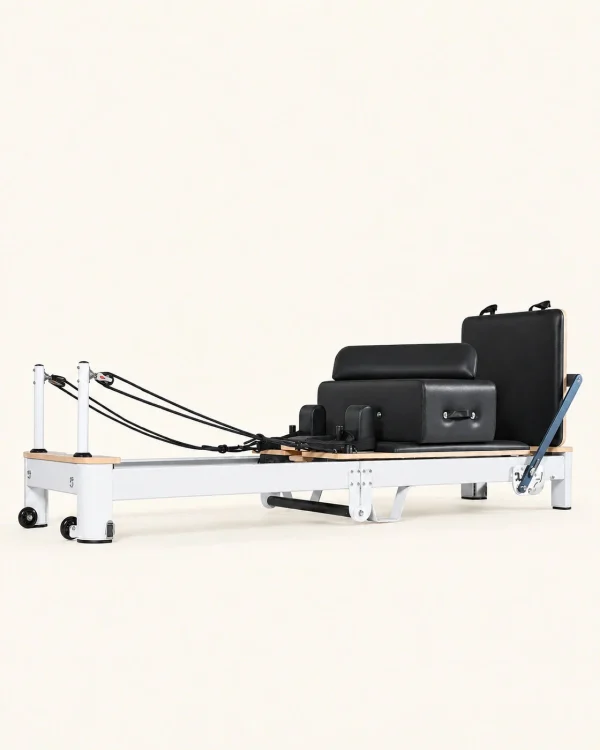
- Aluminium: a contemporary look. Our Aluminium Foldable Reformer comes in black, grey, orange or white.
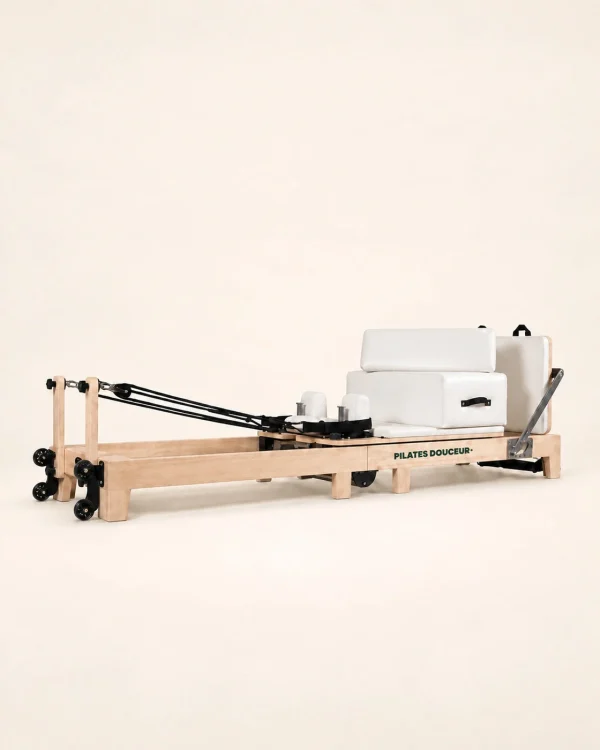
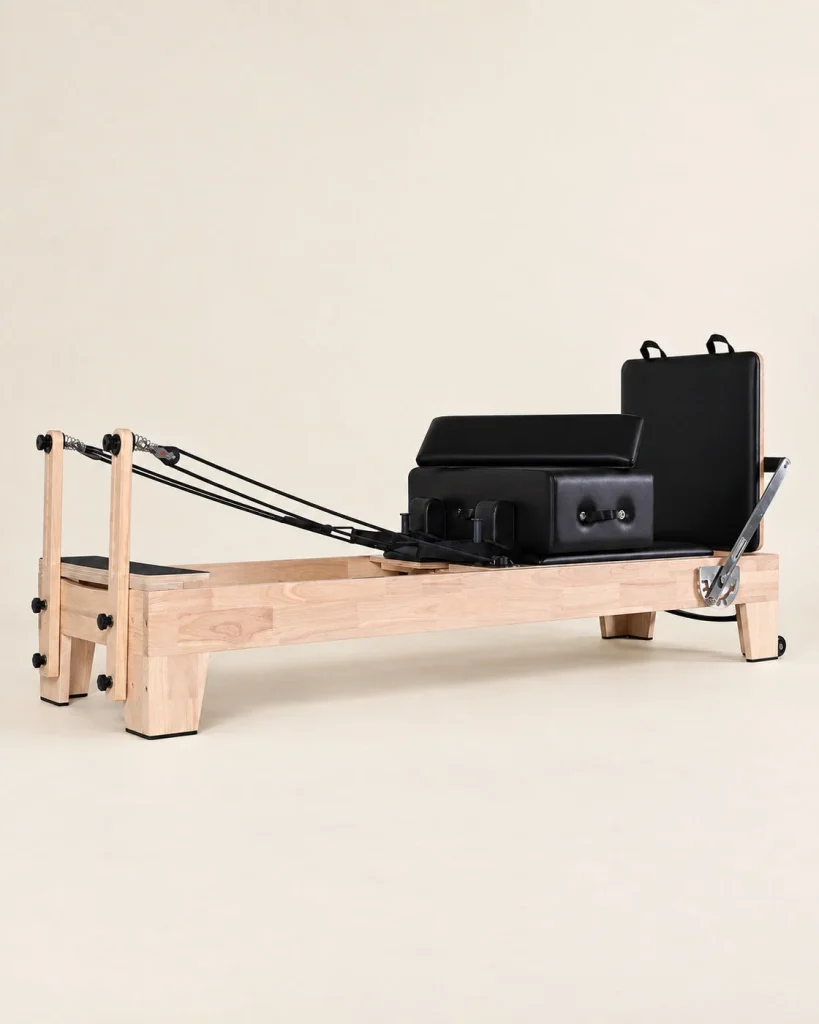
- Solid maple: a natural look. Our Wooden Foldable Reformer comes in white or black.
The reformer will be on show if you keep it in a living area. Choose a colour you are happy to see every day, even when folded.
Tick: you have chosen the colour with the storage space in mind.
Step 6: list the accessories included and those to buy
Compare the complete package, not just the machine. Two similarly priced reformers may come with different equipment.
- Included with the Compact Foldable: resistance bands, a ball with pump and a ring. The sitting box is sold separately.
- For the Aluminium and Wooden models: confirm with us which accessories come with your configuration before ordering.
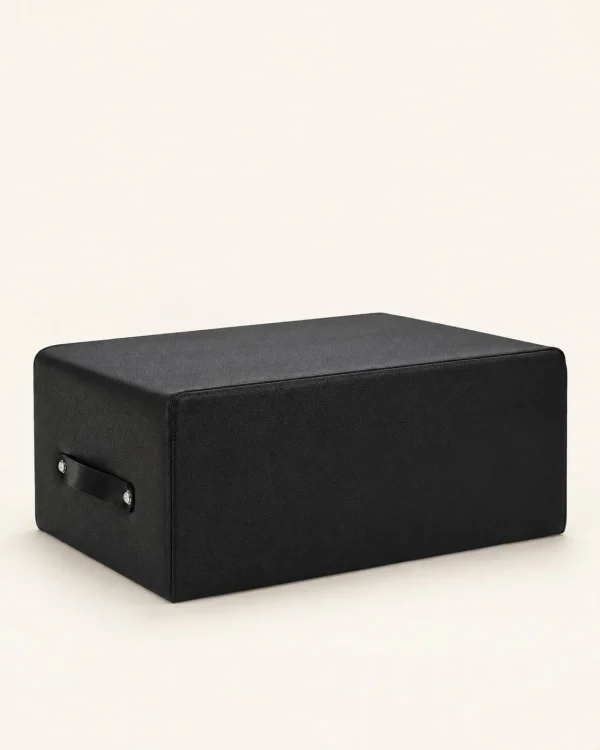
- Often added: a Pilates box (€129.95) for seated, lying or side-lying exercises, and non-slip socks (€12.95).
Tick: you have added up the price of the machine and the accessories you will need.
Step 7: budget, delivery and returns
Your budget should cover the machine and accessories, as standard delivery is free. Read the returns policy before you pay, too.
- Delivery: free standard delivery to 30 European countries in 7 to 14 days (estimated).
- Right of withdrawal: 14 days.
- Returns: possible up to 30 days if the item is new, unused and complete. Return costs are your responsibility unless the product is faulty.
For a machine this size, return costs add up. Take the time to double-check steps 1 to 3 before ordering: it is the best way to avoid having to send it back.
Tick: the delivery time fits your schedule and you have read the returns policy.
How should you read online reviews and rankings?
Treat online rankings and reviews as pointers, not proof. Many “top 10” lists are published by affiliate sites or by the brands themselves.
- Who is publishing? An affiliate site paid per sale, a manufacturer or a media outlet: their interests are not the same.
- What figures are given? A good comparison gives dimensions, weight and number of springs. A review that only talks about “premium quality” is of little use.
- The reviewer’s situation: someone with a dedicated room does not face the same constraints as you in a flat.
Your most reliable tool is still your own checklist, applied to each model’s specifications.
Our 3 foldable reformers compared
Here are the figures from our product pages, to check against your measurements from step 1.
| Criterion | Compact Foldable Reformer | Wooden Foldable Reformer | Aluminium Foldable Reformer |
|---|---|---|---|
| Price | €699.00 | €1,399.95 | €1,599.95 |
| Unfolded | Not listed on the product page | 240 × 60 × 60 cm | 237 × 74 × 28 cm |
| Folded | 105 × 55 × 24 cm | 140 × 60 × 46 cm | 136 × 74 × 50 cm |
| Weight | 32 kg | Not listed on the product page | 68 kg |
| Frame | Not listed on the product page | Solid maple | Aluminium |
| Springs | 5 springs, adjustable armrests | Adjustable springs | Resistance adjustable by springs |
| Accessories | Resistance bands, ball with pump, ring; sitting box sold separately | To be confirmed | To be confirmed |
| Colours | Black | White, black | Black, grey, orange, white |
In practice, the Compact is the smallest and lightest to store. The Wooden Foldable Reformer and the Aluminium Foldable Reformer have an unfolded length close to that of a studio reformer. You can compare them side by side in the foldable reformers collection.
Should you take classes before buying?
Yes: a few supervised sessions before practising on your own are a good investment. Decathlon states that the reformer is more suited to advanced practitioners and found mainly in studios, with a coach. Pilates instructors quoted in the Belgian press advise against using a reformer alone at home without anyone watching.
These sessions also help you buy the right machine, as you will know which settings you actually use. Talk to a healthcare professional if you are in pain, pregnant or have a health condition.
Frequently asked questions
How much space do you need for a reformer at home?
Allow for the length of the machine unfolded, around 2.4 m for our Wooden and Aluminium models, plus clearance to move around it. Also measure the storage space and the door widths.
Is a foldable reformer stable?
A foldable reformer is used unfolded and locked, on a flat, stable floor. Follow the manual for unfolding and locking. If you would rather not move it at all, a fixed model is simpler day to day.
How many springs do you need as a beginner?
There is no ideal number. A 5-spring model such as our Compact Foldable already offers several combinations. The most important thing is learning which setting to choose for each exercise, ideally with an instructor.
Can you return a reformer if it is not right for you?
Yes: you have a 14-day right of withdrawal, and returns are accepted up to 30 days after receipt for an item that is new, unused and complete. Return costs are your responsibility unless the product is faulty.
Should you take classes before buying?
It is recommended. A few supervised sessions will teach you the settings and correct posture, and help you work out what you need before choosing your machine.
Key points
- Measure the workout area, the storage space and the door widths.
- Shared room: foldable. Dedicated room: fixed.
- Check the weight (32 to 68 kg for our foldable models whose weight is listed).
- Compare springs, adjustments and included accessories, including the sitting box.
- Factor delivery and the returns policy into your budget.
Still torn between two models? Our guide to choosing a reformer goes through the criteria one by one.