Pilates tips · · 7 min read
Pilates machines in a physiotherapy clinic: framework, space and equipment
What to know before installing Pilates machines in a physiotherapy clinic: the professional framework (with the French example), choosing apparatus, layout and maintenance.
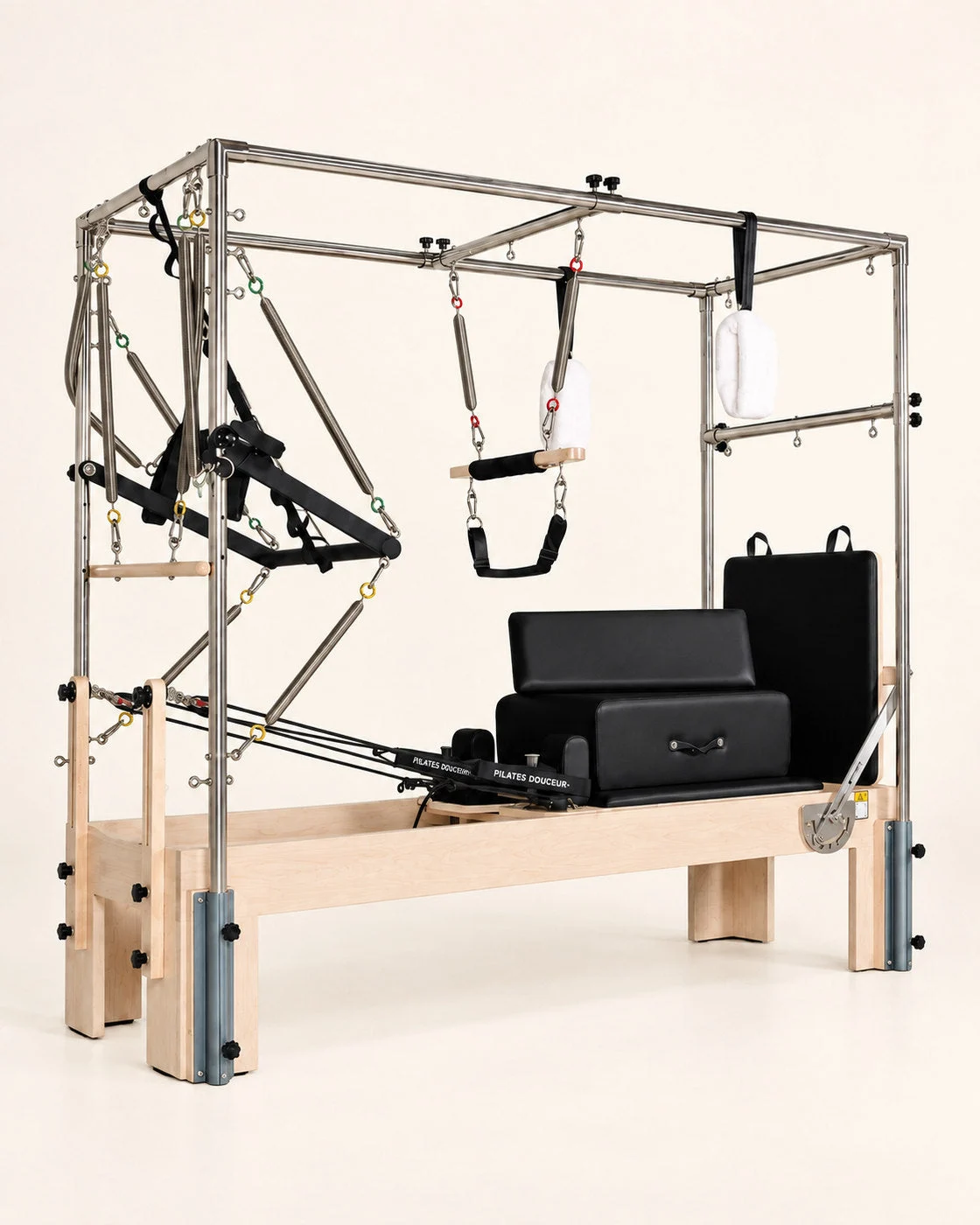
Installing Pilates machines in a physiotherapy clinic means answering three questions: the professional framework (clinical treatment or Pilates classes), the space available and the choice of machines. This article covers organisation and equipment only: how you use the machines with your patients is a matter for your own clinical judgement.
Why Pilates appeals to physiotherapists
Pilates appeals to physiotherapists because it is based on controlled movement, core strength, posture and mobility, and because it can be practised on the mat as well as on machines. Interest is so well established that, in France, certifications specifically for physiotherapists are listed in the France Compétences specific register.
So for a clinic, the question is no longer just “should we offer Pilates?” but “under what framework, with what training and with what equipment?”
The regulatory framework
Clinical treatment and Pilates classes: two different frameworks
A physiotherapy session and a Pilates class are not governed by the same rules. In France, for example, the first is a clinical act carried out under the Public Health Code and the profession’s code of ethics, while the second is the paid supervision of a physical or sports activity, governed by the Sports Code. In the UK and Ireland, check the position with your regulator (HCPC or CORU) and your professional body.
Before investing, be clear about the intended use: machines used during treatment sessions, Pilates classes open to the public, or both. Your choice of equipment depends on it, and so do the formalities.
The 2016 opinion of the French Order of Physiotherapists
The French National Council of the Order of Physiotherapists set out its position in opinion no. 2016-03 of 24 March 2016 on the delivery of physical and sports activity by a physiotherapist. According to this opinion:
- the physiotherapist “may therefore act as an instructor of a physical or sports activity and use that title, provided they also meet the good-character and declaration requirements set by the Sports Code”;
- they may use the title “sports instructor” on their professional documents and plaque “after obtaining [their] professional sports instructor card from the prefect of the département” where they mainly carry out this activity.
As for the procedure, the Order’s leaflet for newly qualified physiotherapists explains that you must first make a declaration to the prefect via eaps.sports.gouv.fr, then apply online for the sports instructor card.
French Pilates certifications: RS7080 and RS7335
Two certifications in the French specific register are directly relevant to physiotherapists, each with a different scope.
| Reference | Title | Intended for | What to know |
|---|---|---|---|
| RS7080 | Integrating Pilates into physiotherapy | Holders of the French state diploma in physiotherapy or an equivalent recognised in France | The fact sheet describes Pilates as practised on the mat, or with apparatus that is not covered by this certification. |
| RS7335 | Teaching the Pilates method | Including physiotherapists who hold a sports instructor card | The target skills include supervising specific apparatus and adjusting springs and straps. Stated prerequisite: at least 50 hours of Pilates practice. |
Wherever you practise, if you plan to use machines, check that your training covers the apparatus and not just mat work.
Where to check your situation
Rules change, and every project is different. For professional practice and ethics, contact your regulator or professional body (in France, your departmental council of the Order). In France, for the sports instructor declaration and professional card, contact the state sports services via eaps.sports.gouv.fr.
Which machines suit a clinic?
The right choice depends mainly on the room you have available: a dedicated room can take a fixed reformer or a combination machine, while a smaller space is better suited to a chair or an arc.
Fixed reformer or reformer with tower
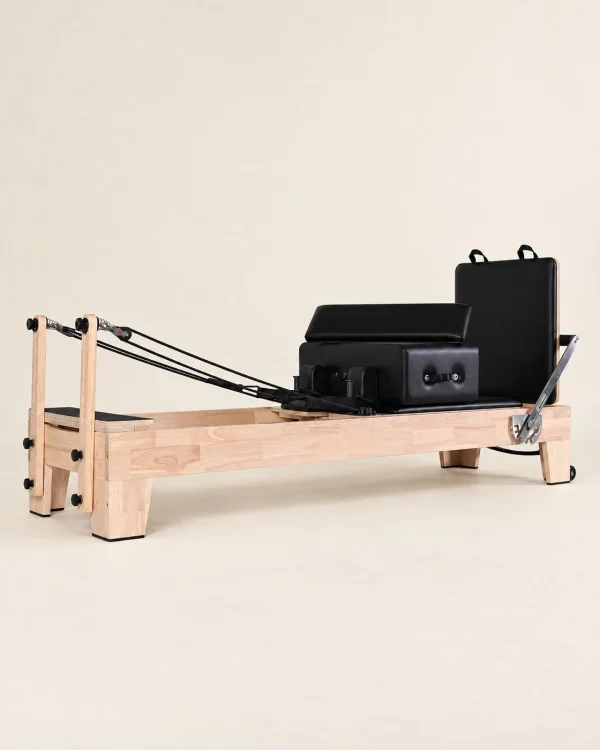
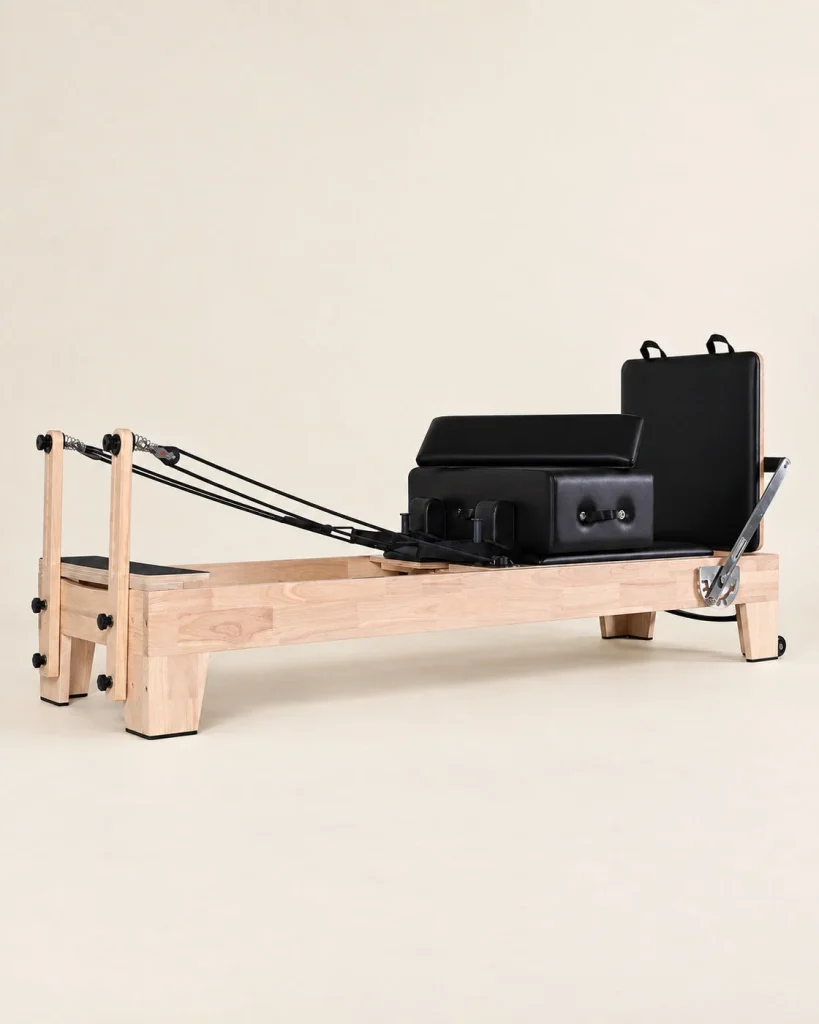
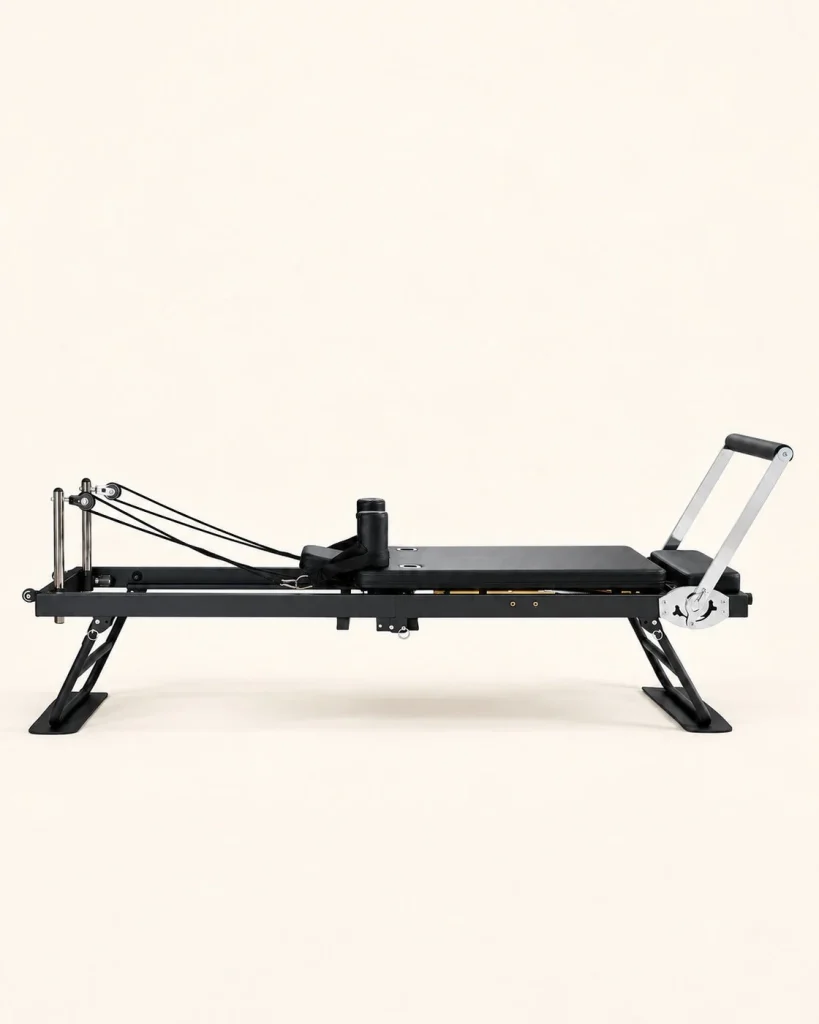
The reformer is the centrepiece of any Pilates space. A fixed model stays ready between appointments, with nothing to move.
- Wooden Studio Reformer: fixed solid wood frame, 241 × 72 × 99.5 cm, 6 adjustable springs, 78 kg.
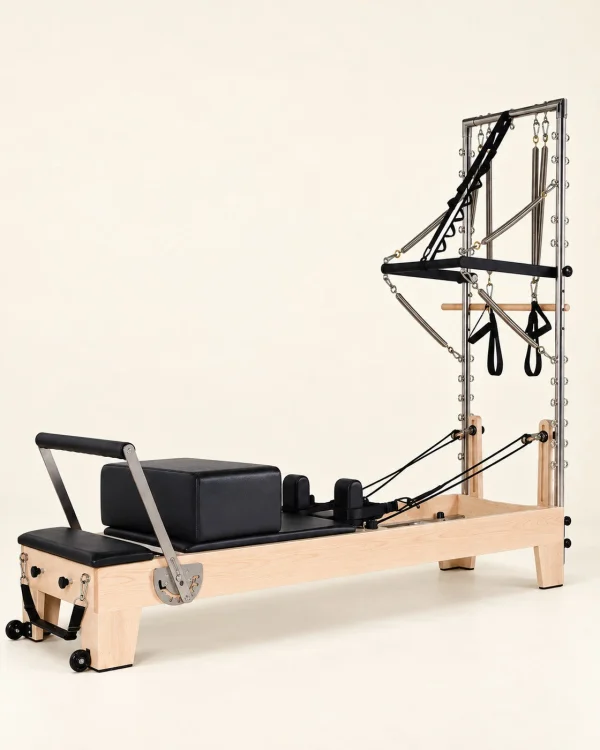
- Studio Reformer with Tower: reformer and tower on the same base, 228 × 68 × 193 cm, 6 adjustable springs, 119 kg. The tower adds exercises without taking up more floor space.
Cadillac table or 3-in-1 for a single room
If you only have one room, a combination machine brings several pieces of apparatus together in a single footprint.
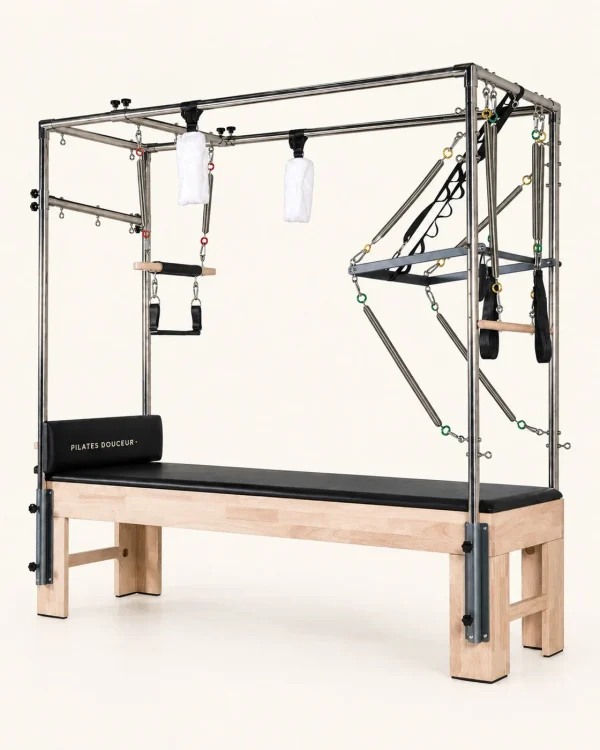
- Oak Cadillac Table: solid oak trapeze table, 242 × 72 × 208 cm, fixed installation, 110 kg.
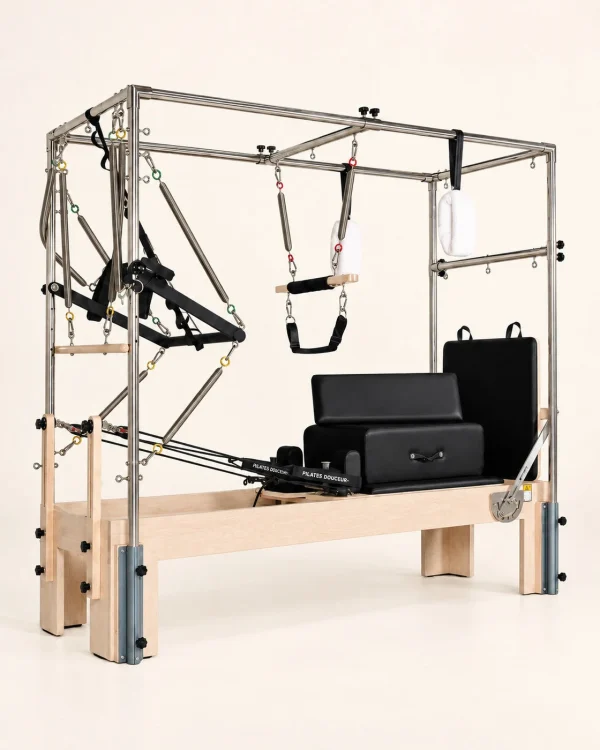
- 3-in-1 Studio Reformer: reformer, tower and Cadillac combined, oak frame, 242 × 72 × 208 cm, 6 reformer springs and 10 trapeze springs, 135 kg.
With a frame height of 208 cm, check your ceiling height and leave some headroom above.
Chair, arc and barrel for small spaces
Smaller apparatus can complement a reformer or equip a room that is too small for one.
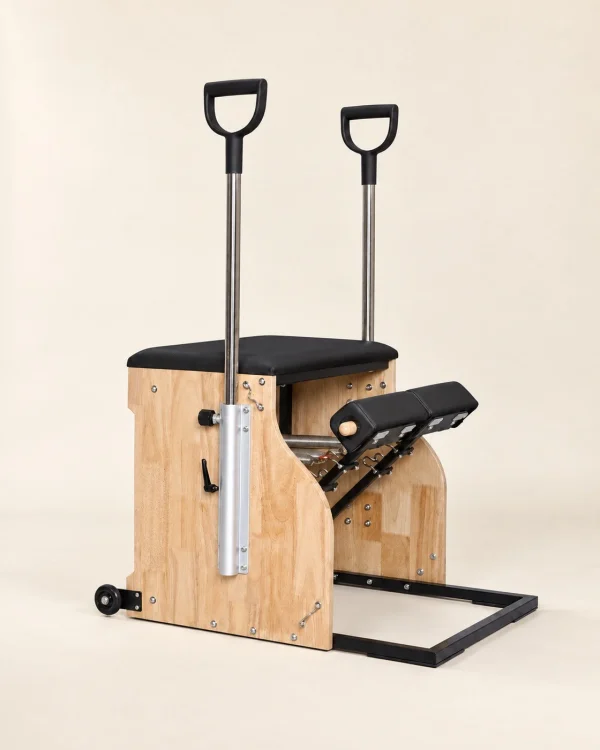
- Pilates Chair with Split Pedals: steel base, 76 × 75 × 61 cm, two independent pedals, 4 springs, 30 kg net.
- Oak Pilates Arc: padded curved support, 91.4 × 43.2 × 32 cm, 11.8 kg, easy to move.
- Adjustable Ladder Barrel: oak frame, barrel sliding on a rail to adjust the distance from the ladder.
Layout: dimensions, weight and access
Before ordering, check each machine’s footprint and weight against your room, doors and floor. All the figures below are taken from our product pages.
| Machine | Dimensions (L × W × H) | Weight | Springs | Price incl. VAT |
|---|---|---|---|---|
| Wooden Studio Reformer | 241 × 72 × 99.5 cm | 78 kg | 6 | €1,499.95 |
| Studio Reformer with Tower | 228 × 68 × 193 cm | 119 kg (net) | 6 | €1,999.95 |
| Oak Cadillac Table | 242 × 72 × 208 cm | 110 kg (net) | See product page | €1,899.95 |
| 3-in-1 Studio Reformer | 242 × 72 × 208 cm | 135 kg | 6 + 10 trapeze | €2,499.95 |
| Pilates Chair with Split Pedals | 76 × 75 × 61 cm | 30 kg (net) | 4 | €699.95 |
| Oak Pilates Arc | 91.4 × 43.2 × 32 cm | 11.8 kg | — | €299.95 |
| Adjustable Ladder Barrel | See product page | See product page | — | €599.95 |
Points to check:
- Clearance: allow space around each machine for the person to get into position and for you to move around it.
- Access: door widths, corridors, lift. A machine weighing over 100 kg needs several people on hand at delivery.
- Floor: stable, level and suited to the load of a fixed installation.
- Lead times: free standard delivery to 30 European countries in 7 to 14 days (estimated).
To compare all our apparatus, browse our studio equipment collection.
Hygiene and care of upholstery and parts
Clean contact surfaces between users and check wear parts regularly. Your cleaning protocol must comply with the manufacturer’s instructions and the hygiene rules that apply to your clinic.
- Upholstery: the arc and barrel are covered in PU faux leather. Use a product suitable for this material, as set out in the manual.
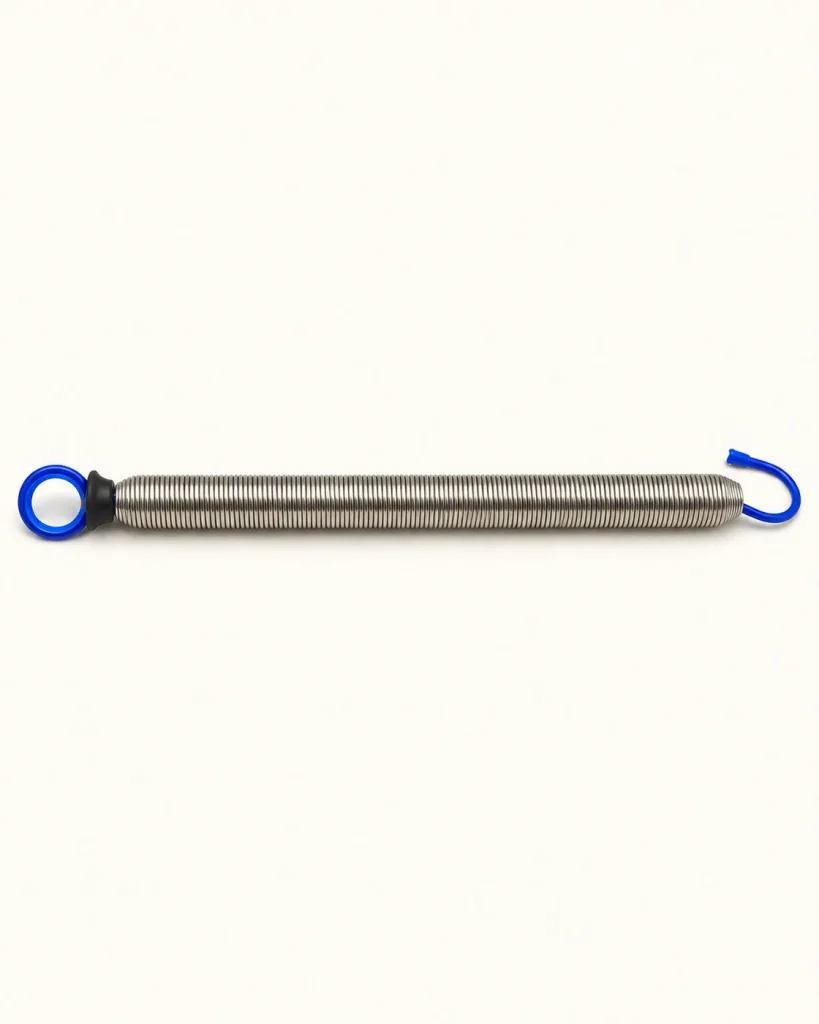
- Mechanical parts: springs, ropes, straps and handles wear with use. Replace them as soon as they show any defect.
- Visual check: check the fixings and that the carriage glides smoothly at the start of each day.
Our installation and care page lists the points to check.
Equipping your clinic: request a quote
From 2 pieces of equipment, volume pricing is available on quotation. Fill in our quote request form with the “sports or wellness professional” profile, your business details and your company registration or VAT number. Give us your room dimensions and the machines you are considering, and we will help you check the layout. For an overview of our trade offer, visit the professional Pilates equipment page.
Frequently asked questions
Can a physiotherapist run group Pilates classes?
In France, according to opinion no. 2016-03 of the National Council of the Order, a physiotherapist may act as an instructor of a physical or sports activity, subject to the good-character and declaration requirements of the Sports Code. Elsewhere, check your situation with your regulator or professional body.
What Pilates training should a physiotherapist take?
In France, there are two certifications in the specific register: RS7080, focused on mat Pilates in physiotherapy, and RS7335, open in particular to physiotherapists holding a sports instructor card, which also covers adjusting the apparatus. In other countries, choose a training course that explicitly covers equipment work.
Which machine should I choose if I only have one room?
A combination machine such as the 3-in-1 Studio Reformer brings together reformer, tower and Cadillac on a 242 × 72 cm footprint, with a height of 208 cm. For a smaller space, a chair or an arc is easier to fit in.
How should machines be cleaned between patients?
Follow the manufacturer’s instructions for cleaning the upholstery and your clinic’s hygiene rules. Our installation and care page lists the regular checks on parts.
Can a clinic get volume pricing?
Yes, from 2 pieces of equipment, on quotation. Choose the “sports or wellness professional” profile in the form.
Key points
- Distinguish between use during treatment and Pilates classes, which may fall under different rules (in France, the Sports Code).
- French Order opinion 2016-03: acting as an instructor is possible subject to good-character and declaration requirements.
- RS7080 covers mat Pilates; for apparatus, check what your training includes.
- For a single room, a combination machine; for a small space, a chair, arc or barrel.
- Check dimensions, weight, ceiling height and access before ordering.