Pilates tips · · 8 min read
How to open a Pilates studio: budget, obligations and equipment, step by step
A step-by-step guide to opening a Pilates studio: concept, legal obligations (with sources), business structure, an equipment budget costed at list price and an opening schedule.
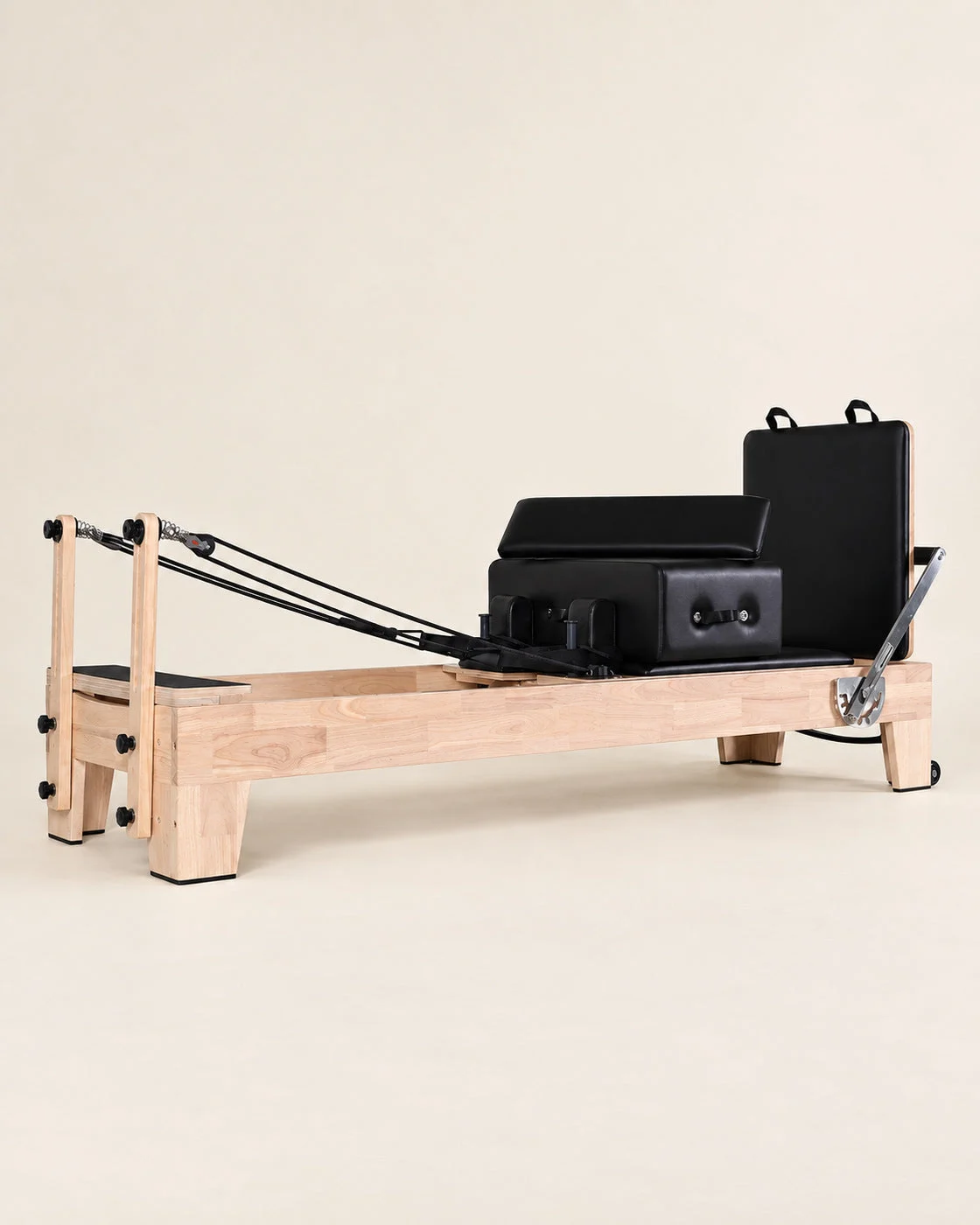
Opening a Pilates studio takes three things: a clear concept, compliance with the legal framework (qualified instructors, insurance, required notices) and a budget based on a real equipment list. This guide follows a project in logical order, from choosing the format to the opening schedule, with our published equipment prices so you can cost the machines. Legal requirements vary from country to country: we use France as a worked example, so check the equivalent rules wherever you plan to open.
Before you cost anything: define your concept
Your concept determines everything else: floor space, number of machines, instructor profile and session prices. Settle it before you start looking for premises.
Mat studio, reformer studio or mixed studio
A mat studio mainly needs floor space and small accessories. A reformer studio is built around fixed machines, which cost more and take up more room but give your offer a clear identity. A mixed studio combines both: mat classes to broaden your audience, and machine classes for more closely supervised practice.
Group, duet or private sessions
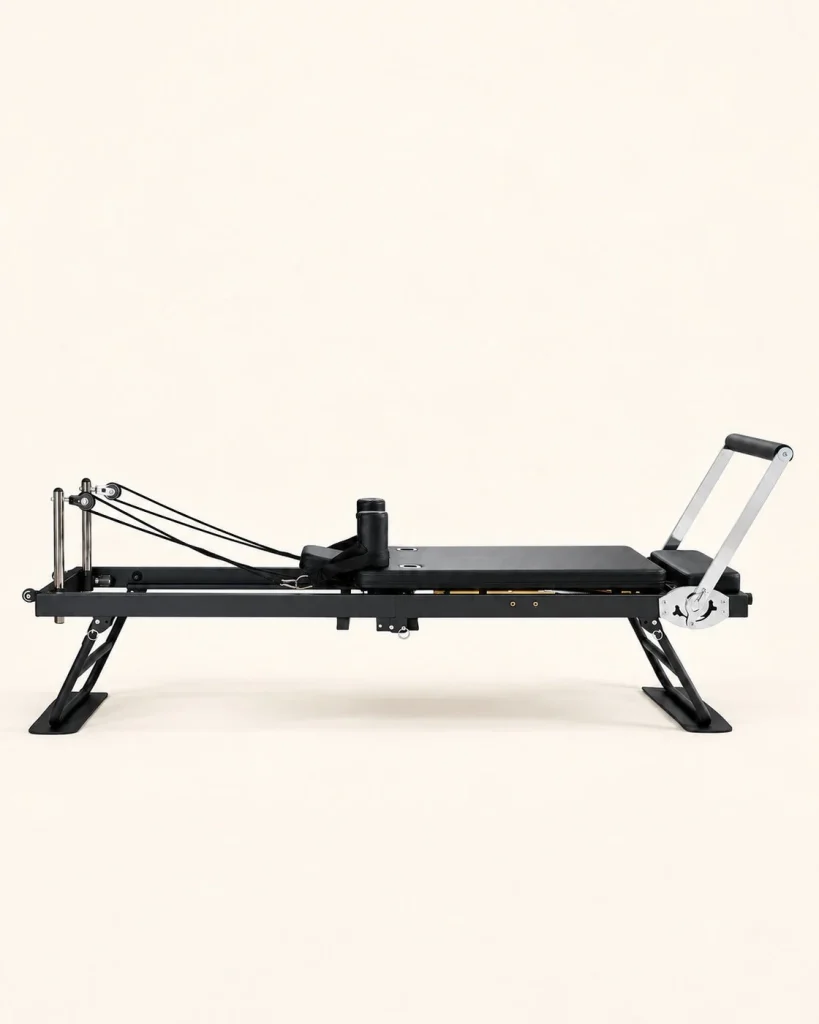
The class format directly determines how many machines you need. A group reformer class needs one station per participant. A duet or private session needs only two stations, but with more variety (reformer with tower, chair, Cadillac). Our guide equipping a Pilates studio explains this “capacity = number of stations” principle in detail.
Independent or franchise
A franchise gives you an established brand and method in return for an entry fee and ongoing royalties. The amounts vary from one network to another: ask the franchisor for its pre-contract disclosure document and have it reviewed. As an independent, you keep control of the concept, equipment and prices, but you have to build your reputation yourself.
Legal obligations for teaching and running a studio
There are two distinct roles: the operator, who runs the business, and the instructor, who teaches the classes. In France, the operator does not need a sports qualification if they do not teach, but they must ensure that everyone who teaches for payment is qualified.
Who can teach for payment?
In France, anyone who teaches, leads or supervises a physical activity for payment must hold a diploma, professional title or certificate of qualification recognised by the Sports Code. They must also register with the state services to obtain a professional card, which must be renewed every 5 years. In other countries, check which qualifications or registrations are required for fitness instructors.
The penalties are severe: according to the French Ministry of Sport fact sheet on sports instructors, working without the required qualification or declaration is punishable by one year’s imprisonment and a €15,000 fine (Article L. 212-8 of the Sports Code). The same penalty applies to the employer. So a private Pilates certification is an addition to the required qualification, not a substitute for it. We cover this in our article on qualifications to teach Pilates.
The operator’s liability insurance
In France, liability insurance is compulsory for running a sports and physical activity facility. According to the ministry fact sheet on sports facilities, the policy must cover the operator, paid instructors, staff and the members admitted to the facility (Article L. 321-7 of the Sports Code). Wherever you open, compare quotes from several insurers and check that equipment-based classes are clearly covered in the policy.
Required notices
In France, a notice board visible to everyone is compulsory. The same ministry fact sheet lists what it must contain:
- a copy of the diplomas and professional card of each paid instructor;
- trainee certificates, where applicable;
- the texts setting out health and safety guarantees;
- the liability insurance certificate.
You should also provide an emergency procedures notice (with emergency numbers), a way of calling the emergency services and a first aid kit. In France, any serious accident must be reported to the prefect.
Premises: public building rules, fire safety, accessibility
A studio open to the public is subject to the rules for premises that receive the public. In France, its category depends on how many people it can hold. For example, a municipal order from the town of Laval classifies a fitness gym as a type X, category 5 public building. Before signing a lease, ask your local authority about the fire safety and accessibility rules that apply to the premises, and about any work that may be required.
Choosing your legal structure
The structure depends on your target turnover, the number of partners and whether you need to hire staff. There are two broad options, which exist under different names in most European countries.
Sole trader or micro-business: simple, but capped
Simplified self-employed status is a good way to test a business on your own, with fewer formalities. In France, for example, the micro-entreprise scheme caps annual turnover for services at €83,600 according to URSSAF (2026 threshold), pro rata if you start part-way through the year. A studio with several reformers and staff will quickly outgrow this status.
Limited company
A company makes sense as soon as you have partners, employees, a significant commercial lease or a loan. The right type of company depends on how you pay yourself, your social security cover and any plans to open more studios. Get an accountant to check your choice.
Building your launch budget
Build your budget item by item, from real quotes. The “ready-made” ranges published online vary too much by city and floor area to be a reliable basis.
The main items
- Premises: deposit, rent, any lease premium.
- Fit-out: flooring, lighting, changing rooms, bringing the premises up to code.
- Equipment: machines, accessories, spare parts.
- Insurance: liability cover, premises insurance.
- Marketing: website, online booking, signage.
- Working capital: enough to cover the first few months while your classes fill up.
Costing the equipment with real prices
Here is a starter set-up for small-group classes of four, costed at our list prices including VAT.
| Equipment | Quantity | Unit price incl. VAT | Subtotal incl. VAT |
|---|---|---|---|
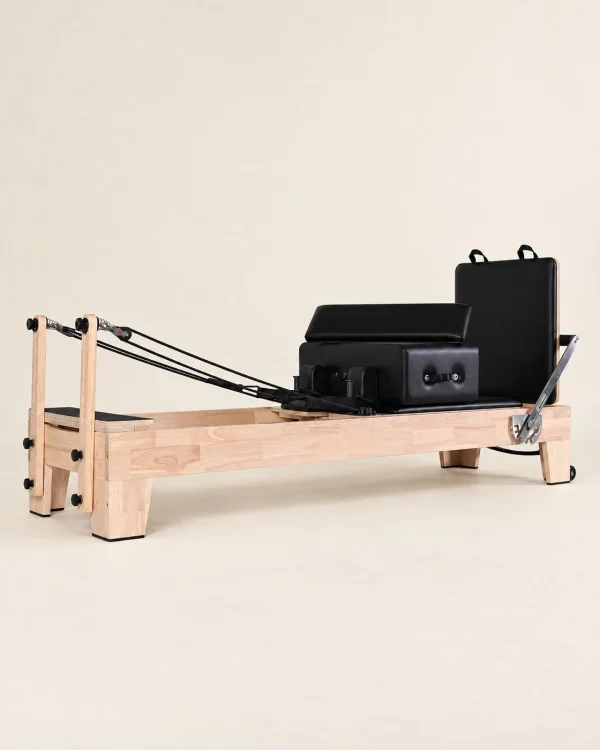
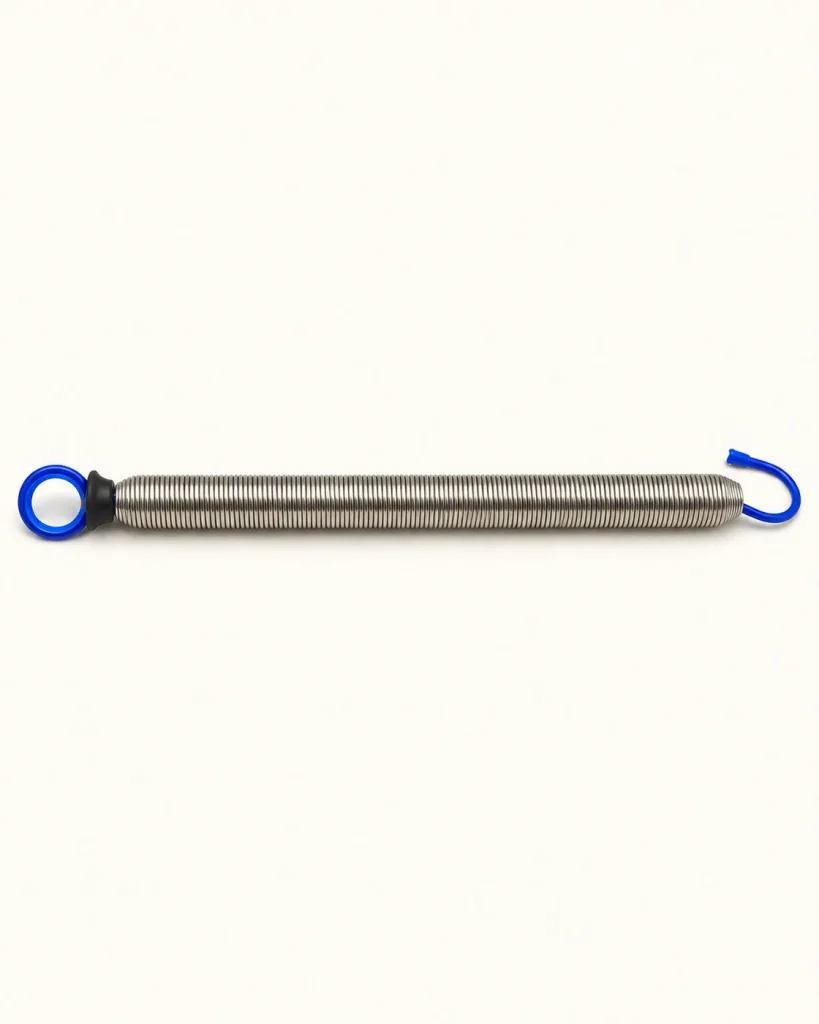
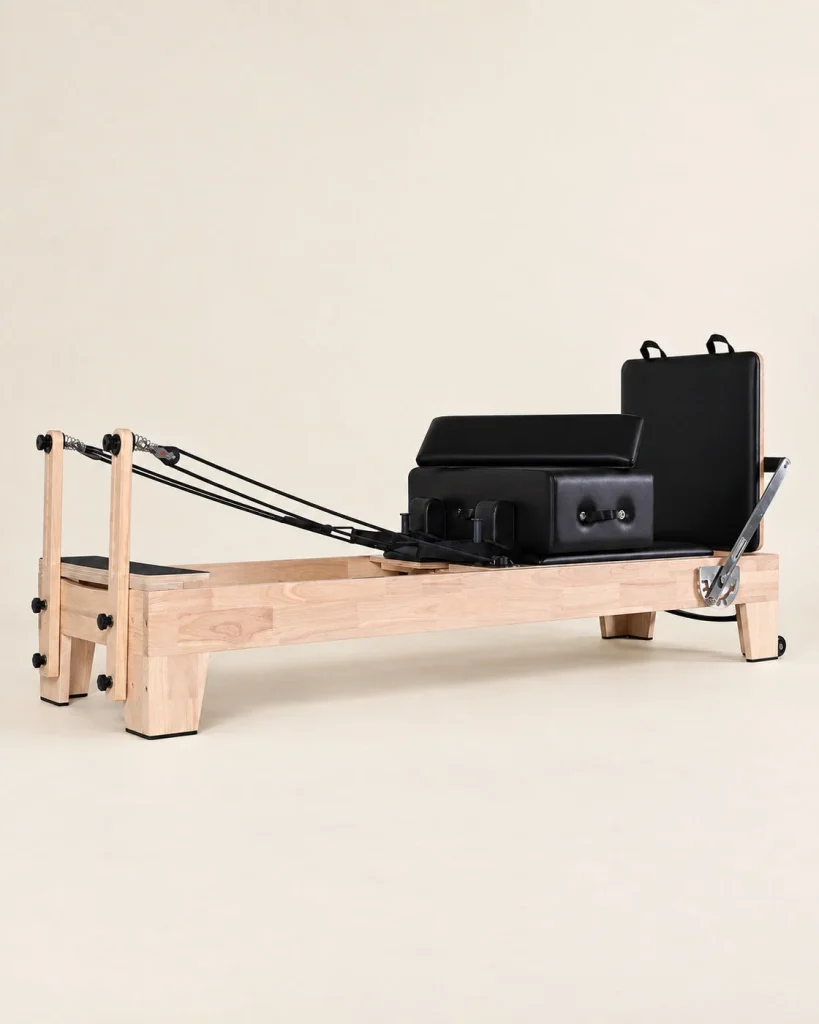
| Wooden Studio Reformer (6 springs, 78 kg) | 4 | €1,499.95 | €5,999.80 |
| Pilates Chair with Split Pedals | 1 | €699.95 | €699.95 |
| Oak Pilates Arc | 1 | €299.95 | €299.95 |
| Pilates Box | 4 | €129.95 | €519.80 |
| Pilates Duo — Ball & Ring | 4 | €29.95 | €119.80 |
| Total at list price | €7,639.30 |
This total is based on our published unit prices. From 2 pieces of equipment, volume pricing is available on quotation. The Wooden Studio Reformer comes in black, white or grey, and all our fixed machines are in the studio equipment collection.
Putting your list together? Request your equipment quote by choosing the “Pilates studio” profile: tell us how many stations you are aiming for and we will price the set-up with volume pricing.
Financing the equipment
There are three common options: personal funds, a business bank loan, and leasing or equipment hire. With leasing, the finance company buys the equipment and leases it to you. In France, according to Banque Populaire, lease payments are deductible from taxable profit, and the contract may include a purchase option at the end; check the tax treatment in your own country. Pilates Douceur does not offer finance, so discuss these options with your bank or a specialist provider, using our quote.
Profitability: the variables that matter
A studio’s profitability depends mainly on three variables that you control:
- Occupancy rate: an empty station during a class earns nothing.
- Number of stations per class: it sets the maximum revenue for a time slot.
- Session price: it depends on your city, the format (group, duet, private) and local competition.
Build your forecast around these three variables, slot by slot, then add your instructors’ hourly cost and your fixed costs. Your accountant or bank can help you test several occupancy scenarios.
Opening schedule
Order the equipment as soon as the lease is signed and you know the fit-out dates. Standard delivery is free to 30 European countries and takes 7 to 14 days (estimated). Full terms are on our delivery page.
- Define the concept and class format.
- Recruit or confirm qualified instructors, with their required registration.
- Choose your legal structure and open a business account.
- Find premises, check the building rules with the local authority and sign the lease.
- Take out liability insurance.
- Order the equipment, allowing for the delivery time.
- Carry out the fit-out, install the machines and prepare the notices.
- Open bookings and launch.
To plan your layout, see also our studio project page and our trade offer.
Checklist
- Concept defined: mat, reformer or mixed; group, duet or private.
- Instructors qualified and registered as required in your country.
- Operator’s liability insurance in place.
- Notice board, emergency procedures notice, first aid kit.
- Premises checked with the local authority (public building rules, fire, accessibility).
- Legal structure chosen with an accountant.
- Equipment quote obtained and order placed with the delivery time in mind.
Frequently asked questions
Do I need a state qualification to open a Pilates studio?
Not to run the studio. To teach for payment, it depends on the country: in France, you need a diploma, title or certificate of qualification recognised by the Sports Code, plus a professional card. If you do not teach yourself, you must employ qualified instructors.
What insurance is compulsory for a Pilates studio?
In France, the operator’s liability insurance. It covers the operator, paid instructors, staff and members, and its certificate must be displayed in the studio. In other countries, liability cover is essential too: check the local requirements with your insurer.
Can I open a Pilates studio as a sole trader?
Often yes, as long as you stay within the limits of the simplified status in your country (in France, the URSSAF turnover threshold for services). With several machines, premises and staff, a company is often more suitable: ask an accountant for advice.
How many reformers do I need to start?
One for each participant in a group class. A studio running classes of four people needs four reformers. For duet or private sessions, two stations are enough, with more versatile machines.
How long should I allow between ordering equipment and opening?
Allow 7 to 14 days for free standard delivery (estimated). Then add time for installation and for instructors to get to know the machines.
Key points
- Your concept determines the number of machines: one station per participant in group classes.
- Teaching for payment requires the qualifications recognised in your country (in France, a recognised diploma and a professional card).
- Liability insurance and the required notices are essential.
- Four studio reformers, a chair, an arc and accessories: €7,639.30 at list price, volume pricing on quotation.
- Build 7 to 14 days for delivery into your opening schedule.